In the dynamic landscape of modern manufacturing, automation has emerged as a pivotal force, reshaping industries and revolutionizing production processes. Among the many machines in the manufacturing arsenal, the CNC press brake stands as a cornerstone of metal fabrication. As a leading supplier of CNC press brakes, we often encounter the question: Can a CNC press brake be automated? The resounding answer is yes, and in this blog, we'll delve into the possibilities, benefits, and considerations of automating a CNC press brake.
Understanding the CNC Press Brake
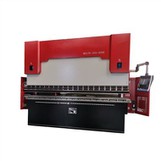
Before we explore automation, let's briefly understand what a CNC press brake is. A CNC (Computer Numerical Control) press brake is a machine tool used for bending sheet metal and plate material. It uses a punch and die set to form precise bends in the metal, with the CNC system controlling the movement and positioning of the ram. This allows for high precision and repeatability in the bending process, making it ideal for mass production and complex bending operations.
We offer a range of press brake machines, including the Manual Press Brake Bending Machine, Hydraulic Sheet Bending Machine, and Heavy Duty Iron Sheet Bending Machine. Each of these machines can be enhanced with automation features to improve efficiency and productivity.
The Case for Automating a CNC Press Brake
Automating a CNC press brake offers numerous benefits that can significantly impact a manufacturing operation. Here are some of the key advantages:
1. Increased Productivity
Automation eliminates the need for manual intervention in many aspects of the bending process. This means that the machine can operate continuously, without the need for breaks or shift changes. As a result, production output can be increased significantly, allowing manufacturers to meet higher demand and improve their bottom line.
2. Improved Precision and Quality
Automated CNC press brakes are programmed to perform precise bends with high repeatability. This reduces the risk of human error, resulting in consistent quality across all parts. Additionally, automation can ensure that each bend is made to the exact specifications, minimizing waste and rework.
3. Enhanced Safety
By automating the bending process, operators are removed from potentially dangerous situations. For example, automated loading and unloading systems can eliminate the need for operators to manually handle heavy or sharp materials. This reduces the risk of accidents and injuries, creating a safer working environment.
4. Cost Savings
While the initial investment in automation may be significant, the long-term cost savings can be substantial. Increased productivity, improved quality, and reduced waste all contribute to lower production costs. Additionally, automation can reduce labor costs by minimizing the need for manual labor.
Types of Automation for CNC Press Brakes
There are several ways to automate a CNC press brake, depending on the specific requirements of the manufacturing operation. Here are some of the most common types of automation:
1. Automated Loading and Unloading Systems
Automated loading and unloading systems use robots or other mechanical devices to move materials to and from the press brake. This eliminates the need for manual handling, improving efficiency and reducing the risk of injury. These systems can be programmed to handle a variety of materials and part sizes, making them suitable for a wide range of applications.
2. Tool Changers
Tool changers allow the press brake to automatically change the punch and die sets, eliminating the need for manual tool changes. This reduces setup time and increases productivity, especially when multiple bends or part geometries are required. Tool changers can be programmed to select the appropriate tool for each bend, ensuring optimal performance.
3. Backgauge Automation
Backgauge automation uses sensors and motors to position the backgauge accurately. This allows for precise control of the bend length and angle, improving the quality and consistency of the bends. Backgauge automation can also be integrated with the CNC system to provide real-time feedback and adjustment, further enhancing the accuracy of the bending process.
4. Integration with Other Manufacturing Processes
CNC press brakes can be integrated with other manufacturing processes, such as laser cutting or welding, to create a fully automated production line. This allows for seamless transfer of materials between different machines, improving efficiency and reducing lead times. Integration can also enable data sharing between machines, providing valuable insights into the production process.
Considerations for Implementing Automation
While the benefits of automating a CNC press brake are clear, there are several factors to consider before implementing automation. Here are some of the key considerations:
1. Production Volume
Automation is most cost-effective for high-volume production runs. If your production volume is low, the initial investment in automation may not be justified. However, if you expect your production volume to increase in the future, automation can provide a scalable solution that can grow with your business.
2. Part Complexity
The complexity of the parts you produce will also impact the feasibility of automation. Some parts may require complex bending operations or custom tooling, which may be more difficult to automate. In these cases, a hybrid approach that combines manual and automated processes may be more appropriate.
3. Workflow and Layout
The layout of your manufacturing facility and the workflow of your production process will need to be considered when implementing automation. For example, you will need to ensure that there is enough space for the automated equipment and that the workflow allows for seamless integration of the automation system.


4. Operator Training
Automation requires a different set of skills and knowledge than manual operation. Your operators will need to be trained on how to operate and maintain the automated equipment, as well as how to troubleshoot any issues that may arise. Providing comprehensive training will ensure that your operators are able to use the automation system effectively.
Conclusion
In conclusion, a CNC press brake can be automated, and the benefits of automation are significant. By increasing productivity, improving precision and quality, enhancing safety, and reducing costs, automation can help manufacturers stay competitive in today's market. However, implementing automation requires careful consideration of several factors, including production volume, part complexity, workflow, and operator training.
As a leading supplier of CNC press brakes, we have the expertise and experience to help you determine the best automation solution for your manufacturing operation. Whether you're looking to automate a single press brake or an entire production line, we can provide the equipment, support, and training you need to succeed.
If you're interested in learning more about automating your CNC press brake or have any questions about our products and services, please don't hesitate to contact us. We look forward to discussing how we can help you take your manufacturing operation to the next level.
References
- "Automation in Metal Fabrication: A Guide to Improving Efficiency and Productivity." IndustryWeek.
- "The Benefits of Automating CNC Press Brakes." Modern Machine Shop.
- "Types of Automation for CNC Press Brakes." Manufacturing.net.