Hey there! As a supplier of sheet metal guillotines, I often get asked a bunch of questions about what these machines can and can't do. One question that pops up quite a bit is, "Can a sheet metal guillotine be used for cutting metal tubes?" Well, let's dig into this topic and find out.
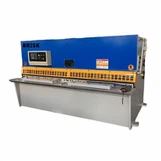
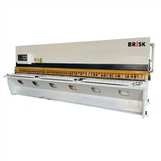
First off, let's quickly talk about what a sheet metal guillotine is. A Sheet Metal Guillotine Shearing Machine is a powerful tool in the metalworking industry. It's designed to cut through sheet metal with precision and efficiency. The way it works is pretty straightforward. You place the sheet metal between a fixed blade and a moving blade. When the machine is activated, the moving blade comes down with force, slicing through the metal. It's like a giant pair of scissors for metal, but much more powerful and accurate.


Now, when it comes to metal tubes, things get a bit more complicated. Metal tubes have a different shape and structure compared to flat sheet metal. Sheet metal is flat and has a uniform thickness across its surface. Tubes, on the other hand, are cylindrical, with a hollow center. This difference in shape and structure means that using a sheet metal guillotine to cut metal tubes isn't as simple as just placing the tube in the machine and hitting the start button.
One of the main issues is that a sheet metal guillotine is designed to apply pressure evenly across a flat surface. When you try to cut a metal tube with a guillotine, the pressure isn't distributed evenly. The blade will first make contact with the outer surface of the tube, but because the tube is round, the force won't be spread out in the same way as it would be on a flat sheet. This can lead to a few problems.
For starters, the tube might deform. Instead of getting a clean cut, the tube could get crushed or bent out of shape. This is especially true for thinner-walled tubes. The pressure from the guillotine blade can cause the tube to collapse before it can be cut properly. Even if the tube doesn't collapse completely, it might end up with a distorted cross-section, which can be a big problem if you need the tube to fit precisely in a particular application.
Another problem is that the cutting action of a guillotine might not be effective for tubes. Guillotines work by shearing the metal, which means they cut through the material by applying a sliding force. This works well for flat sheet metal because the material is relatively easy to shear in a straight line. But with a tube, the curved surface makes it harder for the blade to create a clean shearing action. The blade might end up tearing or ripping the tube rather than cutting it smoothly.
However, that doesn't mean it's impossible to use a sheet metal guillotine to cut metal tubes in some cases. If you're dealing with thick-walled tubes made of a relatively soft metal, and you're not too concerned about getting a perfectly clean cut, you might be able to make it work. You'll need to take some precautions, though. For example, you might need to support the tube properly to prevent it from deforming too much. You could use some kind of jig or fixture to hold the tube in place and distribute the pressure more evenly.
There are also some modified versions of sheet metal guillotines that are designed to handle round or tubular materials. These machines often have special blades or cutting mechanisms that are better suited for cutting tubes. For instance, some guillotines have blades with a curved edge that can better conform to the shape of the tube. Others might use a combination of shearing and punching actions to cut through the tube more effectively.
If you're in the market for a machine that can handle both sheet metal and metal tubes, you might want to consider an Industrial CNC Hydraulic Shearing Machine. These machines are more versatile and can be programmed to handle different types of materials and shapes. They often come with advanced features like adjustable blade clearance, which can help you get a better cut on both flat sheets and tubes.
Another option is a Metal Punching and Shearing Machine. These machines are designed to perform both punching and shearing operations, which can be useful when dealing with metal tubes. They can punch holes in the tube if needed and also make clean cuts.
In conclusion, while a standard sheet metal guillotine isn't the ideal tool for cutting metal tubes, it might be possible to use it in certain situations with the right precautions. But if you need to cut metal tubes regularly and want a reliable and efficient solution, it's probably worth investing in a machine that's specifically designed for that purpose.
If you're interested in learning more about our sheet metal guillotines or other metalworking machines, or if you have any questions about cutting metal tubes, feel free to reach out. We're here to help you find the best solution for your metalworking needs. Whether you're a small workshop or a large industrial facility, we've got the expertise and the products to meet your requirements. So don't hesitate to get in touch and start a conversation about your next project.
References
- Metalworking Machinery Handbook
- Industrial Metal Cutting Techniques Guide