Hey there! As a supplier of press brake machines, I'm super stoked to break down how these awesome pieces of equipment work. Press brake machines are essential in the metalworking industry, used to bend and shape metal sheets with precision. Whether you're a small workshop owner or part of a large manufacturing plant, understanding how a press brake machine operates can help you make the most of its capabilities.
The Basics of a Press Brake Machine
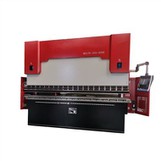
At its core, a press brake machine is designed to bend metal sheets by applying force. It consists of two main parts: the upper beam and the lower bed. The upper beam holds the punch, which is the tool that actually does the bending. The lower bed, on the other hand, holds the die. The die has a specific shape that determines the angle and radius of the bend.
When you want to bend a metal sheet, you place it between the punch and the die. Then, the upper beam moves down towards the lower bed, applying pressure to the metal sheet. As the pressure increases, the metal sheet starts to deform and takes on the shape of the die. The amount of force required to bend the metal depends on several factors, including the thickness and type of metal, the length of the bend, and the desired angle.
Types of Press Brake Machines
There are several types of press brake machines available on the market, each with its own unique features and advantages. Let's take a look at some of the most common types:
Hydraulic Press Bending Machine
Hydraulic press bending machines are one of the most popular types of press brakes. They use hydraulic cylinders to apply force to the upper beam. The hydraulic system provides a smooth and consistent force, allowing for precise bending. These machines are known for their high power and can handle thick and large metal sheets. If you're interested in learning more about hydraulic press bending machines, check out our Hydraulic Press Bending Machine page.
CNC Hydraulic Metal Sheet Bending Machine
CNC (Computer Numerical Control) hydraulic metal sheet bending machines are a step up from traditional hydraulic press brakes. They are equipped with a computer control system that allows you to program the bending process. You can input the dimensions, angles, and other parameters, and the machine will automatically adjust the position of the punch and die to achieve the desired bend. This makes the bending process more accurate and efficient, especially for complex shapes. To explore our range of CNC hydraulic metal sheet bending machines, visit our CNC Hydraulic Metal Sheet Bending Machine page.
Servo Electric Press Brake Machine
Servo electric press brake machines are a newer type of press brake that uses servo motors to drive the upper beam. These machines offer several advantages over hydraulic press brakes, including higher precision, faster operation, and lower energy consumption. The servo motors can be controlled more precisely, allowing for more accurate bending. They are also quieter and require less maintenance. If you're looking for a high-performance press brake machine, consider our Servo Electric Press Brake Machine.
The Bending Process
Now that you know the basics of a press brake machine and the different types available, let's take a closer look at the bending process. The bending process can be divided into several steps:
Step 1: Preparation
Before you start bending, you need to prepare the machine and the metal sheet. This includes selecting the appropriate punch and die for the desired bend, setting the back gauge to the correct position, and making sure the metal sheet is clean and free of any debris.
Step 2: Loading the Metal Sheet
Once the machine is prepared, you can load the metal sheet onto the lower bed. Make sure the sheet is aligned properly with the back gauge and the center of the machine.
Step 3: Setting the Bending Parameters
Next, you need to set the bending parameters, such as the bending angle, the bend radius, and the depth of the bend. This can be done manually on a traditional press brake or programmed into the computer control system on a CNC press brake.
Step 4: Bending the Metal Sheet
Once the parameters are set, you can start the bending process. The upper beam will move down towards the lower bed, applying pressure to the metal sheet. As the pressure increases, the metal sheet will start to deform and take on the shape of the die. The machine will stop automatically when the desired bending angle is reached.
Step 5: Unloading the Metal Sheet
After the bending is complete, you can unload the metal sheet from the machine. Make sure to handle the sheet carefully to avoid any damage.
Factors Affecting the Bending Process
Several factors can affect the bending process and the quality of the bend. Here are some of the most important factors to consider:
Material Properties
The type and thickness of the metal sheet have a significant impact on the bending process. Different metals have different mechanical properties, such as yield strength and ductility, which affect how they deform under pressure. Thicker metal sheets require more force to bend than thinner sheets.


Tooling Selection
The selection of the punch and die is crucial for achieving the desired bend. The punch and die should be the correct size and shape for the metal sheet and the desired bend angle. Using the wrong tooling can result in poor quality bends, such as cracks or wrinkles.
Machine Settings
The settings on the press brake machine, such as the bending speed, the pressure, and the back gauge position, can also affect the bending process. These settings need to be adjusted carefully to ensure a precise and consistent bend.
Operator Skill
The skill and experience of the operator also play a role in the bending process. A skilled operator will be able to set up the machine correctly, select the appropriate tooling, and make any necessary adjustments during the bending process.
Conclusion
In conclusion, press brake machines are powerful and versatile tools that are essential in the metalworking industry. By understanding how these machines work and the different types available, you can choose the right machine for your needs and achieve high-quality bends. Whether you're a small business owner or a large manufacturer, investing in a press brake machine can help you increase productivity and improve the quality of your products.
If you're interested in purchasing a press brake machine or have any questions about our products, please don't hesitate to contact us. We're here to help you find the right solution for your metalworking needs.
References
- ASM Handbook Volume 14A: Metalworking: Sheet Forming. ASM International.
- Tool and Manufacturing Engineers Handbook, Volume II: Forming. Society of Manufacturing Engineers.