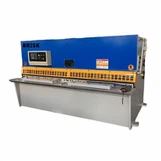
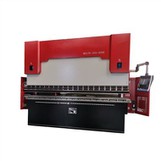
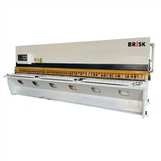
Hey there! As a supplier of hydraulic shears, I'm super excited to share with you the main components of these awesome machines. Hydraulic shears are essential tools in the metalworking industry, used for cutting various types of metal sheets and plates with precision and efficiency. So, let's dive right in and take a closer look at what makes a hydraulic shear tick.
1. The Frame
The frame is like the backbone of the hydraulic shear. It provides the structural support for all the other components and ensures the stability of the machine during operation. Usually made of high - strength steel, the frame is designed to withstand the high forces generated during the cutting process. A well - built frame reduces vibrations and helps in achieving accurate cuts. For instance, if the frame is not sturdy, it can cause the blade to move slightly during cutting, resulting in uneven cuts. We offer a range of hydraulic shears with robust frames that are built to last. Check out our Metal CNC Shear Cutter for a machine with a top - notch frame.


2. The Blades
Blades are the most crucial part of a hydraulic shear. They are responsible for actually cutting through the metal. There are two types of blades in a hydraulic shear: the upper blade and the lower blade. The upper blade is attached to the moving part of the shear, while the lower blade is fixed. These blades are made from high - quality tool steel that can hold a sharp edge for a long time. The sharpness and quality of the blades directly affect the quality of the cut. Dull blades can lead to rough edges, burrs, and even damage to the metal. We make sure that the blades in our hydraulic shears are of the highest quality. If you're looking for a machine with excellent blades, our Hydraulic Guillotine Sheet Shearing Machine is a great option.
3. The Hydraulic System
The hydraulic system is what gives the hydraulic shear its power. It consists of a hydraulic pump, cylinders, valves, and hydraulic fluid. The hydraulic pump is responsible for generating the pressure needed to move the upper blade. The cylinders convert the hydraulic pressure into mechanical force, which is used to drive the cutting action. The valves control the flow of the hydraulic fluid, allowing for precise control of the blade movement. A well - designed hydraulic system ensures smooth and efficient operation. For example, if the hydraulic system is not properly maintained, it can lead to slow blade movement or even a complete breakdown. Our hydraulic shears are equipped with state - of - the - art hydraulic systems that are reliable and easy to maintain. Take a look at our Aluminum Shear Cutting Machine to see a machine with an advanced hydraulic system.
4. The Control System
The control system allows the operator to control the operation of the hydraulic shear. It can be as simple as a basic on - off switch or as complex as a fully automated CNC (Computer Numerical Control) system. In a basic control system, the operator manually starts and stops the cutting process. In a CNC system, the operator can program the machine to make specific cuts, adjust the cutting length, and control the blade speed. This provides a high level of precision and repeatability. Our hydraulic shears come with a variety of control systems to suit different customer needs. Whether you're a small - scale workshop or a large - scale manufacturing plant, we have the right control system for you.
5. The Back Gauge
The back gauge is an important component that helps in setting the length of the cut. It is a movable stop that is placed behind the material being cut. The operator can adjust the position of the back gauge to determine the length of the piece that will be cut. This ensures that all the cuts are of the same length, which is crucial for mass production. A good back gauge should be easy to adjust and provide accurate measurements. In our hydraulic shears, the back gauges are designed for maximum accuracy and ease of use.
6. The Workbench
The workbench is where the material to be cut is placed. It should be flat and smooth to ensure that the material lies evenly during the cutting process. A well - designed workbench also has features like support arms and guides to help in positioning the material correctly. This reduces the risk of the material shifting during cutting, which can lead to inaccurate cuts. Our hydraulic shears have workbenches that are designed with the user in mind, providing a stable and comfortable working surface.
7. Safety Devices
Safety is always a top priority when it comes to operating hydraulic shears. There are several safety devices installed in these machines to protect the operator. These include guards that cover the blades to prevent accidental contact, emergency stop buttons that can immediately halt the machine in case of an emergency, and sensors that detect any abnormal operation. We take safety very seriously and ensure that all our hydraulic shears are equipped with the latest safety devices.
In conclusion, a hydraulic shear is a complex machine made up of several important components. Each component plays a vital role in the overall performance and functionality of the machine. Whether you're in the market for a Metal CNC Shear Cutter, a Hydraulic Guillotine Sheet Shearing Machine, or an Aluminum Shear Cutting Machine, we've got you covered.
If you're interested in purchasing a hydraulic shear or have any questions about our products, don't hesitate to reach out. We're always happy to have a chat and help you find the perfect machine for your needs. Let's start a conversation and see how we can work together to improve your metalworking operations.
References
- Metalworking Machinery Handbook
- Hydraulic Systems and Components: Principles and Applications