Hey there! As a supplier of sheet shearing machines, I often get asked about the power requirements for these bad boys. So, I thought I'd sit down and write a blog post to break it all down for you.
First off, let's talk about what a sheet shearing machine actually does. In a nutshell, it's a tool used to cut metal sheets into different shapes and sizes. Whether you're in the manufacturing industry, a metalworking shop, or a DIY enthusiast, having a reliable sheet shearing machine can make your life a whole lot easier.
Now, when it comes to power requirements, there are a few factors that come into play. The type of machine, the size of the sheets you're cutting, and the material you're working with all play a role in determining how much power you'll need.
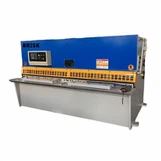
Let's start with the type of machine. There are different kinds of sheet shearing machines out there, like the Benchtop Metal Shear Machine, the Hydraulic Guillotine Sheet Shearing Machine, and the Metal CNC Shear Cutter. Each of these machines has its own unique power needs.
Benchtop metal shear machines are usually smaller and more compact. They're great for small-scale projects and home workshops. Because of their size, they typically don't require as much power as larger industrial machines. Most benchtop models can run on a standard 110-volt electrical outlet, which is pretty convenient. You don't have to worry about setting up any special electrical systems or dealing with high-voltage power sources.
On the other hand, hydraulic guillotine sheet shearing machines are a bit more heavy-duty. These machines use hydraulic power to cut through thick metal sheets with precision. They're commonly used in industrial settings where large volumes of metal need to be processed. Hydraulic machines usually require a higher voltage power supply, often 220 volts or more. This is because the hydraulic system needs a lot of power to generate the force required to cut through the metal.
The Metal CNC Shear Cutter is another type of machine that's becoming increasingly popular. CNC stands for Computer Numerical Control, which means these machines are automated and can be programmed to make precise cuts. They offer a high level of accuracy and efficiency. Like hydraulic guillotine machines, CNC shear cutters also need a significant amount of power to operate. The power requirements can vary depending on the size and complexity of the machine, but they generally need a stable power source to ensure smooth operation.
Another important factor to consider is the size of the sheets you're cutting. If you're working with small sheets, you won't need as much power as you would for larger sheets. Larger sheets require more force to cut through, which means the machine has to work harder and use more power. For example, if you're cutting thin metal sheets that are only a few inches wide, a benchtop machine with a lower power rating might be sufficient. But if you're dealing with large sheets that are several feet wide and thick, you'll need a more powerful machine, like a hydraulic guillotine or a CNC shear cutter.


The material you're working with also affects the power requirements. Different metals have different levels of hardness and thickness, which means they require different amounts of force to cut. For instance, cutting through aluminum is much easier than cutting through steel. Aluminum is a softer metal, so it doesn't require as much power to cut. Steel, on the other hand, is harder and more dense, so it needs more force and therefore more power.
When choosing a sheet shearing machine, it's important to make sure you have the right power supply available. If you don't have the correct voltage or amperage, the machine might not work properly or could even get damaged. It's also a good idea to consult with an electrician to ensure that your electrical system can handle the power requirements of the machine.
In addition to the power supply, you also need to consider the power consumption of the machine. Power consumption is measured in kilowatt-hours (kWh), and it tells you how much electricity the machine uses over a certain period of time. A machine with a high power consumption will cost you more to operate in the long run. So, it's a good idea to look for a machine that is energy-efficient. Many modern sheet shearing machines are designed to be more energy-efficient, which can save you money on your electricity bills.
Another thing to keep in mind is the startup power. Some machines require a higher amount of power to start up than they do to run continuously. This is called the inrush current. When the machine starts, it needs a sudden burst of power to get the motor and other components going. Once the machine is running, the power consumption usually drops to a more normal level. Make sure your electrical system can handle the inrush current to avoid any problems.
So, to sum it all up, the power requirements for a sheet shearing machine depend on the type of machine, the size of the sheets you're cutting, and the material you're working with. Benchtop machines are generally less power-hungry and can run on a standard 110-volt outlet, while hydraulic guillotine and CNC shear cutters need a higher voltage power supply. It's important to choose a machine that matches your power supply and your specific cutting needs.
If you're in the market for a sheet shearing machine and have any questions about power requirements or any other aspect of the machine, don't hesitate to reach out. We're here to help you find the right machine for your needs. Whether you're a small business owner looking to upgrade your equipment or a hobbyist looking for a reliable machine for your home workshop, we've got you covered. Just contact us to start the procurement negotiation process, and let's find the perfect sheet shearing machine for you.
References
- General knowledge from the sheet shearing machine industry
- Manufacturer specifications of various sheet shearing machines