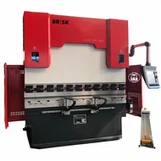
As a trusted supplier of plate rollers, I often receive inquiries from customers about the installation process, particularly regarding the foundation requirements. A proper foundation is crucial for the optimal performance and longevity of a plate roller. In this blog post, I will delve into the key requirements for the foundation when installing a plate roller, providing you with the essential information to ensure a successful installation.
1. Load - Bearing Capacity
One of the primary considerations for the foundation of a plate roller is its load - bearing capacity. Plate rollers can be quite heavy, especially large - scale industrial models. The weight of the machine itself, combined with the force exerted during the rolling process, places significant stress on the foundation.
To determine the appropriate load - bearing capacity, you need to know the total weight of the plate roller. This includes the weight of the frame, rolls, motor, and any additional components. Additionally, you must account for the dynamic loads generated during operation. For example, when the plate roller is bending thick or large - sized metal sheets, the forces involved can be substantial.
Industry standards typically recommend that the foundation should be able to support at least 1.5 to 2 times the static weight of the plate roller to accommodate the dynamic loads. A soil test is often necessary to assess the soil's bearing capacity. If the soil is not strong enough, measures such as deep foundations, including piles or caissons, may be required. Alternatively, a reinforced concrete slab can be used to distribute the load more evenly.
2. Levelness
Levelness is another critical requirement for the foundation of a plate roller. A non - level foundation can lead to uneven stress distribution on the machine, which may cause premature wear and tear of the components, inaccurate bending results, and even safety hazards.
The acceptable levelness tolerance for a plate roller foundation is usually within a few millimeters per meter. For example, a tolerance of ± 2mm per meter is a common standard. To achieve this level of precision, a laser level or a spirit level can be used during the construction of the foundation.
When installing the plate roller on the foundation, it is essential to re - check the levelness. Shims can be used to adjust the machine's position and ensure that it is perfectly level. This adjustment process is crucial to guarantee the smooth operation of the plate roller and the quality of the rolled products.

3. Vibration Damping
Plate rollers generate vibrations during operation, which can have a negative impact on the machine itself and the surrounding environment if not properly managed. A well - designed foundation should have good vibration - damping properties.
One way to achieve vibration damping is by using vibration - isolation pads or mounts. These pads are typically made of rubber or other elastomeric materials and are placed between the plate roller and the foundation. They absorb and dissipate the vibrations, reducing the transmission of shock and noise to the floor and adjacent structures.
In addition to vibration - isolation pads, the design of the foundation itself can also contribute to vibration damping. A thick and massive concrete foundation can act as a natural damper, absorbing some of the vibrations generated by the machine. The use of reinforcement bars in the concrete can further enhance its ability to resist vibrations.

4. Anchoring
Proper anchoring of the plate roller to the foundation is essential to ensure its stability during operation. The machine should be firmly fixed to the foundation to prevent any movement or shifting that could affect the quality of the bending process or pose a safety risk.
Anchor bolts are commonly used to secure the plate roller to the foundation. The size and number of anchor bolts depend on the size and weight of the machine. The bolts should be embedded deep enough into the foundation to provide sufficient holding force.
Before tightening the anchor bolts, it is important to ensure that the plate roller is correctly positioned and leveled. Once the machine is in place, the anchor bolts should be tightened gradually and evenly to avoid any distortion of the machine frame.
5. Accessibility and Maintenance Space
When designing the foundation for a plate roller, it is important to consider the accessibility and maintenance space. The machine will require regular maintenance, such as lubrication, inspection, and replacement of parts. Therefore, there should be enough space around the machine to allow technicians to perform these tasks safely and efficiently.
A clear working area of at least 1 - 2 meters around the plate roller is recommended. This space will also facilitate the loading and unloading of metal sheets. Additionally, the foundation should be designed in a way that allows easy access to the underside of the machine for inspection and maintenance of components such as the drive system and the hydraulic cylinders.
6. Compatibility with the Machine's Design
The foundation should be designed to be compatible with the specific design of the plate roller. Different models of plate rollers may have different installation requirements, such as the location of the anchor points, the size of the base plate, and the orientation of the machine.
Before constructing the foundation, it is essential to refer to the manufacturer's installation manual. The manual will provide detailed information about the foundation requirements, including the dimensions, load - bearing capacity, and anchoring details. By following the manufacturer's guidelines, you can ensure that the foundation is tailored to the specific needs of your plate roller.
7. Environmental Considerations
Environmental factors can also affect the foundation requirements for a plate roller. For example, if the machine is installed in an area with high humidity or corrosive substances, the foundation should be protected against corrosion. This can be achieved by using corrosion - resistant materials for the reinforcement bars and applying a protective coating to the concrete surface.
In regions with extreme temperature variations, the foundation should be designed to withstand thermal expansion and contraction. This may involve using expansion joints in the concrete or selecting materials with appropriate thermal properties.
As a plate roller supplier, I understand the importance of a proper foundation for the performance and durability of our machines. Our Metal Plate Rolling Bending Machine is designed to meet the highest industry standards, and we provide detailed installation instructions to ensure that our customers can install the machines correctly.
If you are considering purchasing a plate roller or have any questions about the foundation requirements, please feel free to contact us for more information. Our team of experts is ready to assist you in making the right decision and ensuring a smooth installation process. We look forward to the opportunity to discuss your specific needs and provide you with the best solutions for your metal - rolling applications.
References
- "Industrial Machinery Installation Guide", American Society of Mechanical Engineers (ASME)
- Manufacturer's Installation Manuals for Plate Rollers