As a supplier of hydraulic guillotines, I often encounter inquiries about the footprint of these machines. The footprint of a hydraulic guillotine refers to the amount of floor space it occupies in a workshop or industrial setting. Understanding this concept is crucial for businesses planning to integrate these machines into their operations, as it directly impacts workspace utilization, layout, and overall efficiency.
Factors Influencing the Footprint of a Hydraulic Guillotine
The footprint of a hydraulic guillotine is not a fixed value; it varies based on several key factors. One of the primary determinants is the machine's cutting capacity. Larger cutting capacities generally require more substantial structures to support the cutting force and handle larger workpieces. For instance, a hydraulic guillotine designed to cut thick and wide metal sheets will typically have a larger footprint compared to a machine with a smaller cutting capacity.
The type of hydraulic guillotine also plays a significant role. There are different types available in the market, such as manual, semi - automatic, and fully automatic models. Automatic models often come with additional components like feeding systems, conveyor belts, and control panels. These supplementary features increase the overall size of the machine and, consequently, its footprint.
Another factor is the design and construction of the machine. Some hydraulic guillotines are designed with a more compact structure, using advanced engineering techniques to minimize the space required. On the other hand, older or less - optimized designs may take up more floor space. For example, a machine with a traditional open - frame design may have a larger footprint than a modern, enclosed - frame guillotine.
Measuring the Footprint
To accurately measure the footprint of a hydraulic guillotine, one needs to consider the machine's length, width, and any additional space required for operation. The length is typically measured from the front to the back of the machine, including any protruding parts such as the blade guard or the control console. The width is measured from one side of the machine to the other, taking into account the widest point, which may include the side guards or the material support tables.
In addition to the physical dimensions of the machine itself, it is essential to account for the clearance space around the guillotine. This clearance is necessary for safe operation, maintenance, and access to the machine. A general rule of thumb is to leave at least a few feet of space around the machine to allow operators to move freely, load and unload materials, and perform routine maintenance tasks.
Importance of Understanding the Footprint
Understanding the footprint of a hydraulic guillotine is vital for several reasons. Firstly, it helps in workspace planning. In a busy industrial environment, every square foot of floor space is valuable. By accurately estimating the footprint of the guillotine, businesses can optimize their workshop layout, ensuring that there is enough space for other equipment, storage, and employee movement.
Secondly, it impacts the installation process. A machine with a large footprint may require special considerations during installation, such as reinforced flooring or a larger doorway for entry. Knowing the footprint in advance allows businesses to make the necessary preparations and avoid costly delays or modifications.
Finally, it affects the overall productivity of the operation. A well - planned workspace with an appropriately sized hydraulic guillotine can streamline the workflow, reducing the time and effort required to move materials and operate the machine. This, in turn, can lead to increased production efficiency and profitability.
Examples of Different Footprints
Let's take a look at some examples of hydraulic guillotines and their typical footprints. A small - scale Guillotine Shearing Machine with a cutting capacity of up to 2mm thick and 1000mm wide metal sheets may have a footprint of approximately 1.5 meters in length and 1 meter in width. This compact size makes it suitable for small workshops or businesses with limited space.
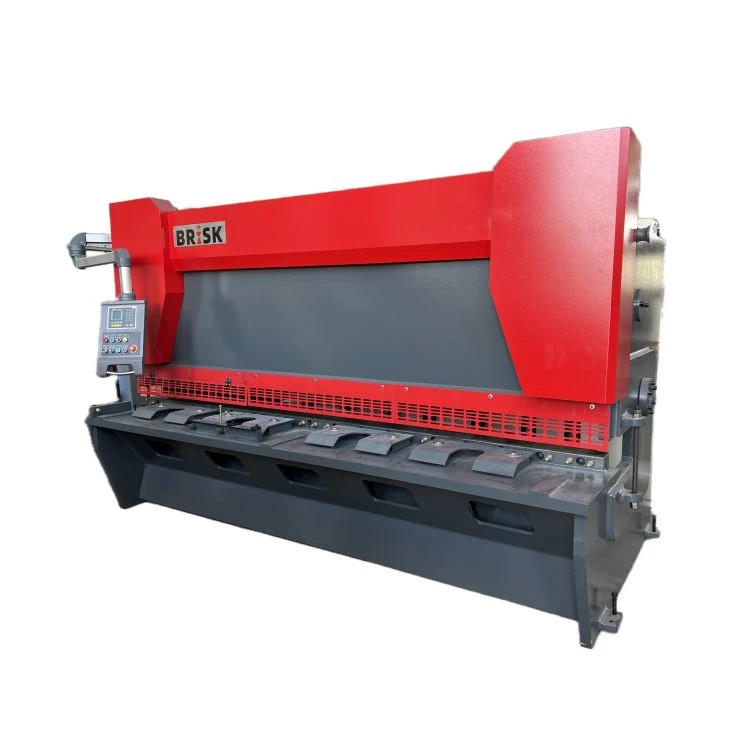

On the other hand, a large - scale Industrial CNC Hydraulic Shearing Machine designed to cut 10mm thick and 3000mm wide metal sheets can have a footprint of around 4 meters in length and 2 meters in width. These machines are often used in large - scale manufacturing facilities where high - volume production is required.
A Hydraulic Metal Guillotine Cutter with a medium - sized cutting capacity, say 5mm thick and 2000mm wide, may have a footprint of about 2.5 meters in length and 1.5 meters in width. This type of machine strikes a balance between size and cutting capacity, making it a popular choice for many medium - sized businesses.
Considerations for Choosing the Right Footprint
When choosing a hydraulic guillotine, businesses should carefully consider their specific needs and the available space in their workshop. If space is limited, a compact machine with a smaller footprint may be the best option. However, it is important not to sacrifice cutting capacity or functionality for the sake of saving space.
On the other hand, if the business has a large workshop and requires high - volume production, a larger machine with a greater cutting capacity may be more appropriate, even though it will have a larger footprint. In such cases, proper workspace planning can help to accommodate the machine without causing overcrowding.
Conclusion
In conclusion, the footprint of a hydraulic guillotine is a critical factor that businesses need to consider when purchasing these machines. It is influenced by various factors such as cutting capacity, machine type, and design. By accurately measuring and understanding the footprint, businesses can optimize their workspace, ensure a smooth installation process, and enhance overall productivity.
If you are in the market for a hydraulic guillotine and need more information about the footprint or other aspects of these machines, we are here to help. Our team of experts can provide you with detailed specifications and guidance to help you choose the right machine for your business. Contact us today to start the procurement discussion and take your manufacturing operations to the next level.
References
- "Hydraulic Machinery Handbook" - A comprehensive guide on hydraulic equipment, including guillotines.
- Industry reports on metalworking machinery, which provide data on the typical footprints of different types of hydraulic guillotines.