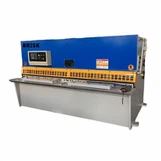
Hey there! As a supplier of sheet shearing machines, I've seen firsthand how the sharpness of the blades can make or break the cutting quality. In this blog, I'm gonna share with you the ins and outs of how blade sharpness influences the cutting quality of a sheet shearing machine.
Let's start with the basics. What exactly do we mean by blade sharpness? Well, it's all about how well the blade can slice through the material. A sharp blade has a fine edge that can cleanly cut through the sheet metal, while a dull blade will struggle to make a clean cut, often leaving behind rough edges, burrs, or even causing the material to deform.
One of the most obvious impacts of blade sharpness is on the edge quality of the cut. When you're using a sharp blade, the cut is clean and precise. The edges are smooth, and there are no rough spots or burrs. This is crucial, especially in industries where the appearance of the cut edges matters, like in the manufacturing of furniture or decorative metalwork. On the other hand, a dull blade will tear and rip the material, leaving behind jagged edges that not only look bad but also require additional finishing work.
Another important aspect is the accuracy of the cut. A sharp blade can cut the material exactly where you want it to, with minimal deviation. This is essential for applications where precise dimensions are required, such as in the production of electrical enclosures or automotive parts. A dull blade, however, may wander off the intended cutting line, resulting in parts that are out of spec and may not fit together properly.
The sharpness of the blades also affects the efficiency of the cutting process. When the blades are sharp, the machine can cut through the material quickly and easily, reducing the cutting time and increasing the overall productivity. You won't have to use as much force to make the cut, which means less wear and tear on the machine and lower energy consumption. In contrast, a dull blade requires more force to cut through the material, which can slow down the cutting process, increase the risk of machine breakdowns, and raise your operating costs.
Now, let's talk about how blade sharpness impacts different types of sheet shearing machines. We offer a variety of shearing machines, including the Automatic Hydraulic Swing Beam Shearing Machine, the Benchtop Metal Shear Machine, and the Aluminum Shear Cutting Machine.
For the Automatic Hydraulic Swing Beam Shearing Machine, sharp blades are crucial for achieving high-speed and high-precision cutting. This machine is designed to handle large volumes of sheet metal, and a sharp blade ensures that each cut is clean and accurate, even at high cutting speeds. A dull blade can cause the machine to jam or produce inconsistent cuts, which can be a major headache in a production environment.
The Benchtop Metal Shear Machine is a more compact and versatile option, often used in small workshops or for light-duty cutting tasks. Even though it's smaller, the importance of blade sharpness remains the same. A sharp blade on this machine will make it easier to cut through thin sheets of metal with precision, while a dull blade can make the cutting process difficult and frustrating.
The Aluminum Shear Cutting Machine is specifically designed for cutting aluminum sheets. Aluminum is a soft and malleable material, and a sharp blade is essential for making clean cuts without deforming the material. A dull blade can cause the aluminum to bunch up or tear, resulting in a poor-quality cut.


So, how can you ensure that your blades stay sharp? Regular maintenance is key. You should clean the blades after each use to remove any debris or metal shavings that can dull the edge. It's also a good idea to inspect the blades regularly for signs of wear and tear, such as nicks or chips. If you notice any damage, it's important to replace the blades as soon as possible to avoid compromising the cutting quality.
In addition to regular maintenance, using the right type of blade for the material you're cutting is also important. Different materials require different blade geometries and coatings to achieve the best cutting results. For example, cutting stainless steel may require a blade with a harder edge than cutting mild steel.
In conclusion, the sharpness of the blades has a significant impact on the cutting quality of a sheet shearing machine. It affects the edge quality, accuracy, and efficiency of the cut, as well as the overall performance of the machine. By keeping your blades sharp and using the right type of blade for the job, you can ensure that you get the best possible cutting results and maximize the lifespan of your machine.
If you're in the market for a new sheet shearing machine or need to replace your existing blades, don't hesitate to reach out. We're here to help you find the right solution for your needs and ensure that you get the best cutting quality possible. Whether you're a small workshop or a large manufacturing plant, we have the expertise and the products to meet your requirements. Let's start a conversation and see how we can work together to improve your cutting process.
References
- "Sheet Metal Cutting Handbook" - A comprehensive guide on sheet metal cutting techniques and best practices.
- Industry research papers on the performance of shearing machines and the impact of blade sharpness.