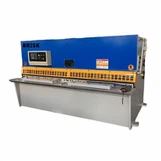
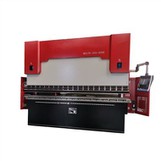
Hey there! I'm a supplier of 10ft sheet metal brakes, and I often get asked, "What's the maximum thickness of sheet metal a 10ft brake can bend?" Well, let's dive right into it and figure this out together.


First off, what's a 10ft sheet metal brake? It's a pretty handy tool. A 10 - foot sheet metal brake is a machine that's used to bend sheet metal. It's got a long bed, which is 10 feet in length, allowing you to work on larger pieces of metal. This kind of brake is commonly used in industries like construction, automotive, and manufacturing. You can use it to make all sorts of stuff, from ductwork to decorative metal pieces.
Now, the maximum thickness of sheet metal that a 10ft brake can bend isn't a one - size - fits - all answer. It depends on a bunch of factors.
Material Type
The type of metal you're working with makes a huge difference. Different metals have different properties, especially when it comes to their hardness and ductility.
- Aluminum: Aluminum is a relatively soft metal. It's quite ductile, which means it can be bent easily. A 10ft brake can usually handle aluminum sheets up to around 1/8 inch thick without too much trouble. For example, if you're making aluminum flashing for a roofing project, you can use a 10ft brake to bend sheets of this thickness.
- Steel: Steel is a bit more challenging. Mild steel, which is commonly used in many applications, can typically be bent up to about 1/16 inch thick with a standard 10ft brake. However, if you're dealing with high - strength steel, the maximum thickness that can be bent will be even less. High - strength steel is much harder and less ductile than mild steel, so it requires more force to bend.
Brake Capacity
The capacity of the brake itself is another crucial factor. Not all 10ft brakes are created equal. Some brakes are more powerful and better built than others.
- Mechanical Brakes: These are the more traditional type of brakes. They use a mechanical system, like gears and levers, to apply force to the metal. A standard mechanical 10ft brake might have a lower capacity compared to a hydraulic one. It can usually handle thinner sheets, say up to 1/16 inch for mild steel.
- Hydraulic Brakes: Hydraulic brakes are more powerful. They use hydraulic fluid to generate force, which allows them to bend thicker sheets. A high - quality 10ft hydraulic brake can bend mild steel sheets up to 3/32 inch thick or even more in some cases.
Bending Method
The way you bend the metal also affects the maximum thickness. There are different bending methods, such as air bending and bottom bending.
- Air Bending: In air bending, the metal is bent by pressing it against a die with a punch. The metal doesn't fully contact the die, and the bend is formed by the pressure applied. This method is more forgiving and can be used for a wider range of thicknesses. A 10ft brake can often bend slightly thicker sheets using air bending compared to other methods.
- Bottom Bending: Bottom bending involves fully pressing the metal into the die. This method requires more force and is usually used for more precise bends. However, it might limit the maximum thickness of the metal that can be bent.
So, as you can see, it's hard to give a definite answer about the maximum thickness. But generally speaking, for a good - quality 10ft hydraulic brake, you can expect to bend mild steel up to around 3/32 inch thick, and aluminum up to 1/8 inch thick.
If you're in the market for a sheet metal brake, we've got some great options. Check out our Sheet Metal Press Brake, which is a high - performance machine that can handle a variety of thicknesses. We also have the Heavy Duty Iron Sheet Bending Machine, perfect for those tough jobs. And if you're looking for a reliable Press Brake Bending Machine, we've got you covered.
We understand that every project is different, and you might have specific requirements. That's why we're here to help. Whether you're a small - scale DIYer or a large - scale industrial user, we can provide you with the right sheet metal brake for your needs. If you're interested in learning more about our products or want to discuss your project, don't hesitate to reach out. We're always happy to have a chat and help you find the perfect solution for your sheet metal bending needs.
References
- "Sheet Metal Forming Handbook" by George E. Dieter
- "The Fundamentals of Metal Bending" - Industrial Metalworking Journal