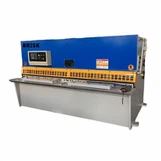
Can a hydraulic shear be used for cutting non - ferrous metals?


As a supplier of hydraulic shears, I often encounter inquiries from customers about the versatility of our products. One common question that arises is whether a hydraulic shear can effectively cut non - ferrous metals. In this blog, I will delve into this topic, exploring the technical aspects, advantages, and limitations of using hydraulic shears for non - ferrous metal cutting.
Understanding Non - Ferrous Metals
Non - ferrous metals are metals that do not contain significant amounts of iron. This group includes aluminum, copper, brass, bronze, and titanium, among others. These metals are widely used in various industries due to their unique properties such as high conductivity, corrosion resistance, and low density. For example, aluminum is commonly used in the aerospace and automotive industries because of its lightweight and strength - to - weight ratio. Copper is favored in electrical applications due to its excellent electrical conductivity.
How Hydraulic Shears Work
Before discussing their suitability for non - ferrous metals, it's important to understand how hydraulic shears operate. A hydraulic shear uses hydraulic power to generate a large amount of force. This force is applied to a blade, which then cuts through the material placed between the blade and the anvil. The hydraulic system consists of a pump, cylinders, and valves that work together to control the movement and force of the blade. The precision and power of hydraulic shears make them a popular choice for cutting various materials in industrial settings.
Advantages of Using Hydraulic Shears for Non - Ferrous Metals
1. Precision Cutting
Hydraulic shears can provide high - precision cuts, which is crucial when working with non - ferrous metals. For instance, in the manufacturing of electronic components made from copper or aluminum, precise cuts are necessary to ensure proper functionality. The hydraulic system allows for accurate control of the blade movement, resulting in clean and straight cuts.
2. High Cutting Capacity
These shears are capable of handling relatively thick non - ferrous metal sheets. For example, a well - designed hydraulic shear can cut through aluminum sheets up to several millimeters thick. This high cutting capacity makes them suitable for a wide range of applications, from small - scale workshops to large - scale industrial production.
3. Efficiency
Hydraulic shears can cut through non - ferrous metals quickly. The hydraulic power system enables rapid blade movement, reducing the time required for each cut. This efficiency translates into increased productivity, which is a significant advantage for businesses looking to optimize their manufacturing processes.
4. Cost - effectiveness
When compared to some other cutting methods, hydraulic shears offer a cost - effective solution for cutting non - ferrous metals. They have a relatively low initial investment cost and require less maintenance over time. Additionally, their high efficiency helps to reduce labor costs and increase overall production output.
Limitations and Considerations
1. Material Hardness
While hydraulic shears can cut many non - ferrous metals, extremely hard non - ferrous metals such as some titanium alloys may pose challenges. These hard materials may require specialized cutting tools or higher - powered hydraulic shears. In such cases, it's important to consult with a technical expert to determine the most suitable cutting solution.
2. Edge Quality
In some cases, the edge quality of the cut may not be as smooth as desired, especially when cutting thicker non - ferrous metal sheets. This can be due to factors such as the type of blade used and the cutting speed. However, with proper blade selection and adjustment of cutting parameters, the edge quality can be significantly improved.
3. Material Thickness and Width
There are limitations to the maximum thickness and width of non - ferrous metal sheets that a hydraulic shear can cut. It's essential to choose a hydraulic shear with the appropriate cutting capacity based on the specific requirements of your application.
Our Hydraulic Shear Products for Non - Ferrous Metal Cutting
We offer a range of hydraulic shears that are suitable for cutting non - ferrous metals. Our Benchtop Metal Shear Machine is a compact and versatile option for small - scale workshops and DIY projects. It is easy to operate and can provide precise cuts on thin non - ferrous metal sheets.
For larger - scale industrial applications, our Automatic Hydraulic Swing Beam Shearing Machine is an excellent choice. It has a high cutting capacity and can handle a wide range of non - ferrous metal thicknesses. The automatic operation feature improves efficiency and reduces labor requirements.
If you are specifically looking for a machine to cut aluminum, our Aluminum Shear Cutting Machine is designed to provide optimal performance. It is equipped with specialized blades and a hydraulic system that is tailored to the properties of aluminum, ensuring clean and precise cuts.
Conclusion
In conclusion, hydraulic shears can indeed be used for cutting non - ferrous metals. They offer several advantages such as precision cutting, high capacity, efficiency, and cost - effectiveness. However, it's important to consider the limitations and choose the right hydraulic shear for your specific application. Whether you are a small workshop owner or a large - scale industrial manufacturer, our hydraulic shear products can meet your non - ferrous metal cutting needs.
If you are interested in learning more about our hydraulic shears or would like to discuss your specific requirements, we encourage you to contact us for a detailed consultation. Our team of experts is ready to assist you in finding the most suitable cutting solution for your business.
References
- ASM Handbook Committee. (2009). ASM Handbook Volume 16: Machining. ASM International.
- Kalpakjian, S., & Schmid, S. R. (2013). Manufacturing Engineering and Technology (6th ed.). Pearson.