

Can a plate roller be used for non - ferrous metals?
As a supplier of plate rollers, I often receive inquiries from customers about the compatibility of our machines with non - ferrous metals. Non - ferrous metals, such as aluminum, copper, brass, and titanium, have unique properties that set them apart from ferrous metals like steel. In this blog post, I will explore whether a plate roller can be used for non - ferrous metals, discussing the advantages, challenges, and considerations.
Advantages of Using a Plate Roller for Non - Ferrous Metals
-
Versatility
One of the primary advantages of using a plate roller for non - ferrous metals is its versatility. Plate rollers are designed to bend metal plates into various shapes, including cylinders, cones, and complex curves. This flexibility makes them suitable for a wide range of applications in industries such as aerospace, automotive, and construction. For example, in the aerospace industry, plate rollers can be used to bend aluminum sheets for aircraft fuselages and wings. -
Precision Bending
Modern plate rollers are equipped with advanced control systems that allow for precise bending operations. This is crucial when working with non - ferrous metals, as they often require tight tolerances. The ability to control the bending radius, angle, and curvature accurately ensures that the final product meets the required specifications. For instance, when bending copper sheets for electrical components, precision is essential to ensure proper fit and functionality. -
Efficiency
Plate rollers can significantly improve the efficiency of the metal bending process. They can handle large - scale production runs, reducing the time and labor required compared to manual bending methods. This is especially beneficial for industries that require high - volume production of non - ferrous metal components. For example, in the automotive industry, plate rollers can be used to bend aluminum panels for car bodies, enabling mass production.
Challenges of Using a Plate Roller for Non - Ferrous Metals
-
Material Properties
Non - ferrous metals have different material properties compared to ferrous metals. For example, aluminum is softer and more ductile than steel, while titanium has a high strength - to - weight ratio and is more difficult to work with. These properties can pose challenges during the bending process. Softer metals may be more prone to surface damage, such as scratches and dents, while harder metals may require more force to bend. -
Tooling Requirements
The tooling used in a plate roller needs to be carefully selected to ensure compatibility with non - ferrous metals. Harder materials may require special tooling to prevent wear and tear. For example, when bending titanium, carbide - tipped rolls may be necessary to withstand the high forces involved. Additionally, the surface finish of the rolls can affect the quality of the bent metal. Smooth rolls are often preferred for non - ferrous metals to minimize surface damage.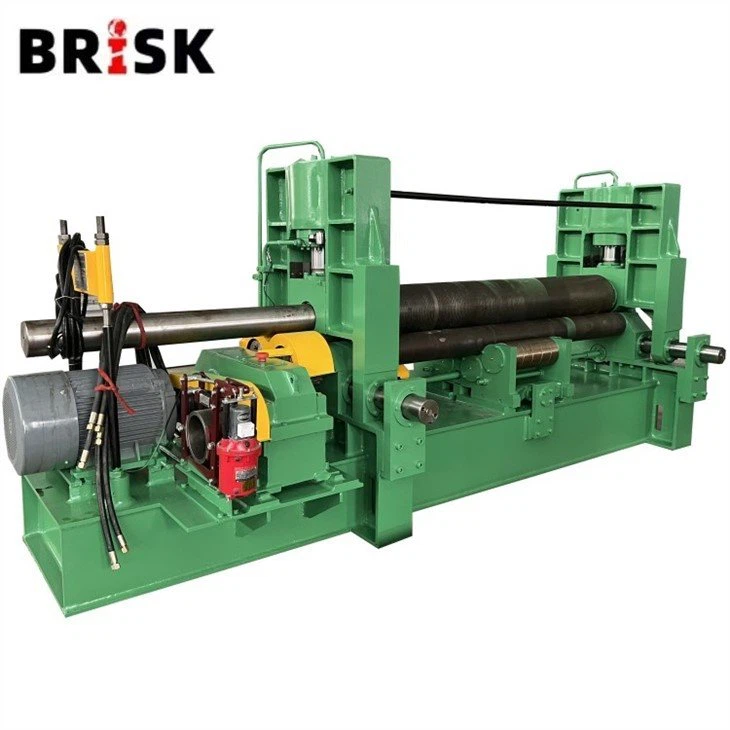

-
Heat Generation
During the bending process, heat is generated due to the deformation of the metal. Non - ferrous metals have different thermal properties compared to ferrous metals, and excessive heat can cause problems such as annealing, which can change the material's properties. Therefore, it is important to control the bending speed and apply appropriate cooling methods to prevent overheating. For example, when bending copper, water cooling may be used to dissipate the heat.
Considerations When Using a Plate Roller for Non - Ferrous Metals
-
Material Selection
Before using a plate roller for non - ferrous metals, it is important to consider the specific type of metal and its properties. Different non - ferrous metals have different bending characteristics, and the machine settings may need to be adjusted accordingly. For example, the bending force, speed, and roll diameter may need to be optimized for each material. -
Machine Capability
Ensure that the plate roller has the necessary capabilities to handle non - ferrous metals. This includes the maximum bending capacity, the power of the drive system, and the accuracy of the control system. It is also important to check the machine's compatibility with the specific non - ferrous metal you plan to use. For example, some plate rollers may be designed specifically for softer metals, while others can handle harder materials. -
Operator Training
Proper operator training is essential when using a plate roller for non - ferrous metals. Operators should be familiar with the material properties, the machine settings, and the safety procedures. They should also be able to recognize and address any issues that may arise during the bending process, such as surface damage or overheating.
Our Plate Rollers for Non - Ferrous Metals
At our company, we offer a wide range of Metal Plate Rolling Bending Machine that are suitable for non - ferrous metals. Our machines are designed with advanced technology and high - quality components to ensure precision, efficiency, and reliability.
We have plate rollers with different capacities and configurations to meet the diverse needs of our customers. Whether you need to bend small - scale aluminum sheets or large - scale titanium plates, we have the right machine for you. Our machines are also equipped with user - friendly control systems that allow for easy operation and adjustment.
In addition, we provide comprehensive after - sales service, including installation, training, and maintenance. Our team of experts is always ready to assist you with any questions or issues you may have.
Conclusion
In conclusion, a plate roller can be used for non - ferrous metals, offering many advantages such as versatility, precision bending, and efficiency. However, there are also challenges and considerations, such as material properties, tooling requirements, and heat generation. By carefully selecting the material, the machine, and the tooling, and by providing proper operator training, you can achieve high - quality results when using a plate roller for non - ferrous metals.
If you are interested in purchasing a plate roller for non - ferrous metals, please feel free to contact us. We will be happy to discuss your specific requirements and provide you with a customized solution.
References
- ASM Handbook Volume 2: Non - Ferrous Alloys and Special - Purpose Materials.
- Metal Forming Handbook: Processes and Applications.
- Plate Rolling Machine Manufacturer's Manuals.


