In the world of metal fabrication, the ability to bend materials with different strengths is a crucial requirement. As a leading supplier of NC Press Brakes, we often encounter inquiries from customers about the machine's capacity to handle various materials. This blog post aims to delve into the question: Can an NC Press Brake bend materials with different strengths?
Understanding NC Press Brakes
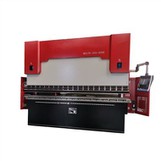
Before we explore the bending capabilities of NC Press Brakes, let's first understand what they are. An NC (Numerical Control) Press Brake is a machine tool used for bending sheet metal and plate materials. It utilizes a punch and die set to create precise bends at specific angles. The NC system allows for automated control of the bending process, enabling high precision and repeatability.
Our company offers a range of NC Press Brakes, including the Servo Electric Press Brake Machine, CNC Hydraulic Metal Sheet Bending Machine, and Hydraulic Sheet Metal Press Brake. These machines are designed to meet the diverse needs of metal fabrication industries, from small workshops to large-scale manufacturing plants.
Factors Affecting Bending of Different Strength Materials
The ability of an NC Press Brake to bend materials with different strengths depends on several factors:
1. Machine Capacity
The first consideration is the machine's capacity, which is typically measured in terms of tonnage. The tonnage indicates the maximum force the press brake can apply during the bending process. Materials with higher strength require more force to bend. Therefore, it is essential to select a press brake with sufficient tonnage to handle the materials you intend to work with.
For example, mild steel is a commonly used material in metal fabrication, and it has relatively low strength. A press brake with a lower tonnage may be sufficient for bending mild steel sheets. However, if you need to bend high-strength materials such as stainless steel or aluminum alloys, a press brake with higher tonnage will be required.


2. Punch and Die Selection
The punch and die set is another critical factor in bending different strength materials. The shape, size, and material of the punch and die can significantly affect the bending process. For materials with different strengths, different punch and die geometries may be required to achieve the desired bend quality.
For instance, a sharp punch may be suitable for bending thin sheets of mild steel, while a rounded punch may be better for bending thicker sheets or high-strength materials. The die opening size also needs to be carefully selected to ensure proper bending. A smaller die opening will result in a sharper bend, while a larger die opening will produce a more gradual bend.
3. Bending Radius
The bending radius is the radius of the curve formed during the bending process. It is an important parameter that affects the bend quality and the material's integrity. Different materials have different minimum bending radii, which are determined by their strength and ductility.
Materials with higher strength generally require a larger bending radius to avoid cracking or breaking during the bending process. The NC Press Brake's control system can be programmed to adjust the bending radius according to the material properties, ensuring accurate and consistent bends.
4. Bending Speed
The bending speed also plays a role in bending different strength materials. Higher bending speeds may be suitable for materials with lower strength, as they can reduce the cycle time and increase productivity. However, for high-strength materials, a slower bending speed may be necessary to allow the material to deform gradually and prevent damage.
The NC Press Brake can be programmed to adjust the bending speed based on the material type and thickness, optimizing the bending process for different strength materials.
Advantages of Using NC Press Brakes for Different Strength Materials
Despite the challenges associated with bending materials with different strengths, NC Press Brakes offer several advantages:
1. Precision and Repeatability
The NC system in the press brake allows for precise control of the bending process, ensuring accurate and consistent bends. This is particularly important when working with different strength materials, as even small variations in the bending parameters can affect the bend quality.
The ability to program the machine to repeat the same bending operation multiple times ensures high productivity and reduces the risk of errors. This is especially beneficial for mass production or when working on complex parts that require multiple bends.
2. Flexibility
NC Press Brakes are highly flexible machines that can be easily adapted to different bending requirements. The control system can be programmed to change the bending parameters, such as the bending angle, radius, and speed, according to the material properties.
This flexibility allows manufacturers to work with a wide range of materials, from mild steel to high-strength alloys, without the need for extensive machine modifications. It also enables quick changeovers between different jobs, reducing downtime and increasing efficiency.
3. Quality Control
The NC Press Brake's advanced control system provides real-time monitoring and feedback during the bending process. This allows operators to detect and correct any issues immediately, ensuring high-quality bends and minimizing waste.
The ability to store and recall bending programs also facilitates quality control. Operators can easily access the bending programs for different materials and parts, ensuring that the same high-quality standards are maintained throughout the production process.
Case Studies
To illustrate the effectiveness of NC Press Brakes in bending different strength materials, let's look at a few case studies:
Case Study 1: Bending Mild Steel and Stainless Steel
A metal fabrication company was tasked with producing a series of cabinets made from both mild steel and stainless steel sheets. The company used our CNC Hydraulic Metal Sheet Bending Machine to perform the bending operations.
By adjusting the tonnage, punch and die selection, and bending parameters in the NC system, the company was able to achieve high-quality bends on both mild steel and stainless steel sheets. The precision and repeatability of the machine ensured that all the cabinets met the required specifications, resulting in satisfied customers and increased productivity.
Case Study 2: Bending Aluminum Alloys
Another customer needed to bend aluminum alloy sheets for a aerospace component. The aluminum alloy had high strength and required a specific bending radius to meet the design requirements.
Using our Servo Electric Press Brake Machine, the customer was able to program the machine to adjust the bending speed, tonnage, and bending radius according to the aluminum alloy's properties. The result was a series of accurate and consistent bends that met the strict quality standards of the aerospace industry.
Conclusion
In conclusion, an NC Press Brake can indeed bend materials with different strengths, provided that the machine capacity, punch and die selection, bending radius, and bending speed are carefully considered. The advanced features of NC Press Brakes, such as precision control, flexibility, and repeatability, make them suitable for bending a wide range of materials, from low-strength mild steel to high-strength alloys.
If you are looking for a reliable NC Press Brake to meet your metal fabrication needs, our company offers a comprehensive range of machines that are designed to handle different strength materials. Our experienced team can provide you with expert advice on machine selection, punch and die design, and bending process optimization.
We invite you to contact us for more information about our NC Press Brakes and to discuss your specific requirements. Whether you are a small workshop or a large manufacturing plant, we are committed to providing you with the best solutions for your metal bending needs.
References
- "Metal Forming Handbook: Processes and Applications" by G. E. Dieter
- "Press Brake Operation and Maintenance Manual" by various press brake manufacturers