Hey there! I'm from an NC Press Brake supplier, and today I wanna chat about how to adjust the angle compensation of an NC Press Brake. It's a crucial topic, especially if you're in the metal - bending business.
Why Angle Compensation Matters
First off, let's talk about why angle compensation is so important. When you're using an NC Press Brake to bend metal sheets, achieving the right angle is key. Even small deviations can lead to parts that don't fit together properly, which means wasted materials and more work to correct the issue.
The machine's natural deflection during the bending process is one of the main reasons for angle errors. As the ram presses down on the metal, the press brake frame and tooling can flex. This flexing changes the effective bending force and angle, resulting in a final part that may not have the intended angle. That's where angle compensation comes in. It helps you account for these deflections and get the accurate angles you need.
Understanding the Basics of Angle Compensation
Before you start adjusting the angle compensation, you need to understand a few basic concepts. The two main factors that affect angle compensation are the material properties and the bending process itself.
Different materials have different elastic and plastic properties. For example, stainless steel is more rigid than aluminum, so it will require different compensation settings. You also need to consider the thickness of the material. Thicker sheets generally need more compensation because they exert more force on the machine during bending.
The bending process parameters, such as the bending radius, the punch and die selection, and the bending speed, also play a role. A smaller bending radius usually requires more compensation because it puts more stress on the machine.
Steps to Adjust Angle Compensation
Step 1: Measure the Actual Angle
The first step in adjusting the angle compensation is to measure the actual angle of the bent part. You can use a protractor or a more advanced angle - measuring tool like a digital angle gauge. Make a test bend using your NC Press Brake with the current settings. Then, measure the angle of the bent part. Compare this measured angle with the desired angle. If there's a difference, you'll need to adjust the compensation.
Step 2: Check the Machine Settings
Next, check the machine settings related to angle compensation. Most NC Press Brakes have a built - in angle compensation function in their control system. Access the control panel of your machine and look for the angle compensation settings. Here, you can adjust parameters such as the compensation value and the compensation curve.


The compensation value is the amount by which you want to adjust the bending angle. For example, if your measured angle is 2 degrees less than the desired angle, you can set the compensation value to 2 degrees. The compensation curve, on the other hand, allows you to adjust the compensation based on different factors, such as the bending length or the material thickness.
Step 3: Consider the Tooling
The tooling you use can also affect the angle compensation. Worn - out or damaged punches and dies can cause inaccurate bending angles. Check your tooling regularly for signs of wear and tear. If the tooling is in poor condition, replace it.
Also, make sure that the tooling is properly installed and aligned. Misaligned tooling can lead to uneven bending forces and inaccurate angles. You may need to adjust the position of the punch and die to ensure proper alignment.
Step 4: Make Small Adjustments and Test
Once you've made the necessary changes to the machine settings and checked the tooling, it's time to make another test bend. But don't make large adjustments all at once. Instead, make small, incremental changes to the angle compensation value. After each change, make a test bend and measure the angle.
Keep repeating this process until you achieve the desired angle. It may take a few tries, but patience is key here. Remember, small adjustments are easier to manage and can help you fine - tune the angle compensation more accurately.
Tips for Effective Angle Compensation
- Keep Records: It's a good idea to keep a record of your angle compensation settings for different materials, thicknesses, and bending processes. This way, you can refer back to these records in the future and save time when setting up the machine for similar jobs.
- Regular Maintenance: Regular maintenance of your NC Press Brake is essential for accurate angle compensation. Keep the machine clean, lubricate the moving parts, and check the alignment of the components regularly. A well - maintained machine will perform better and give you more consistent results.
- Operator Training: Make sure your operators are well - trained in angle compensation adjustment. They should understand the basic principles and be able to follow the adjustment steps correctly. This will help reduce errors and improve the overall efficiency of your bending operations.
Our NC Press Brake Products
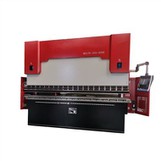
As an NC Press Brake supplier, we offer a wide range of high - quality machines. Our Hydraulic Sheet Metal Press Brake is known for its powerful hydraulic system and precise control. It can handle a variety of sheet metal bending tasks with ease.
If you're looking for a more energy - efficient option, our Servo Electric Press Brake Machine is a great choice. It offers fast and accurate bending with low energy consumption.
And for heavy - duty applications, our Hydraulic Press Brake Machine is designed to provide maximum force and durability.
Contact Us for Purchase and Consultation
If you're interested in our NC Press Brake products or need more information about angle compensation adjustment, don't hesitate to get in touch with us. We're here to help you find the right machine for your needs and provide you with all the support you need for successful bending operations.
References
- Smith, J. (2018). Metal Bending Technology. Publisher: Metal Tech Press.
- Johnson, A. (2020). Guide to NC Press Brake Operations. Publisher: Machine Ops Books.