Hey there! As a supplier of small press brakes, I often get asked about how to adjust the parallelism of the upper and lower dies in these machines. It's a crucial aspect that can significantly impact the quality of your bending operations. So, let's dive right into it!
Why Parallelism Matters
First off, you might be wondering why parallelism is such a big deal. Well, when the upper and lower dies aren't parallel, it can lead to uneven bending. This means that your parts might come out with inconsistent angles or dimensions, which is a huge no - no in the manufacturing world. You could end up with parts that don't fit together properly, causing delays and extra costs. So, getting that parallelism right is essential for producing high - quality bent parts.
Tools You'll Need
Before we start adjusting the parallelism, let's talk about the tools you'll need. You'll definitely need a feeler gauge. This little tool is super handy for measuring the gap between the upper and lower dies at different points. You'll also want a straightedge. A good quality straightedge will help you check if the dies are in line horizontally. And of course, a set of wrenches is a must for making any adjustments to the machine.
Step 1: Initial Inspection
The first step is to do a visual inspection of the press brake. Check the upper and lower dies for any signs of damage or wear. If you notice any chips, cracks, or excessive wear, it's a good idea to replace the damaged parts before proceeding. A damaged die can make it almost impossible to achieve proper parallelism.
Next, use your straightedge to check the horizontal alignment of the dies. Place the straightedge across the top of the lower die and see if it lines up evenly with the upper die. If there are any obvious gaps or misalignments, you'll need to make some adjustments.
Step 2: Measuring the Gap
Now, it's time to use the feeler gauge. Start by measuring the gap between the upper and lower dies at the two ends and in the middle. Take your time and make sure you're getting accurate measurements. Write down these measurements so you can keep track of them.
If the gap is not the same at all three points, then the dies are not parallel. For example, if the gap at one end is larger than the gap in the middle or at the other end, you'll need to adjust the die at that end to make it smaller.
Step 3: Making Adjustments
Most small press brakes have adjustment screws or bolts that allow you to change the position of the upper or lower die. Use your wrenches to loosen the appropriate screws or bolts.
If the gap at one end is too large, you'll need to move the die at that end closer to the other die. Tighten the adjustment screw or bolt on that side to bring the dies closer together. After making a small adjustment, re - measure the gap using the feeler gauge. Keep making small adjustments and re - measuring until the gap is the same at all three points.
It's important to make small adjustments at a time. If you make too large of an adjustment, you might overshoot and end up with the opposite problem.
Step 4: Final Checks
Once you think you've achieved parallelism, do one final check. Use the straightedge again to make sure the dies are still horizontally aligned. Also, measure the gap between the dies at a few more points along their length to confirm that the parallelism is consistent.
If everything looks good, you're all set! Your press brake should now be ready to produce high - quality bent parts.
Tips and Tricks
- Regular Maintenance: Make parallelism checks a part of your regular maintenance routine. Over time, the press brake can experience vibrations and normal wear and tear, which can affect the parallelism of the dies. By checking and adjusting the parallelism regularly, you can prevent problems before they occur.
- Clean the Dies: Before making any adjustments, make sure the dies are clean. Dirt and debris can affect your measurements and make it difficult to achieve proper parallelism.
- Use the Right Dies: Make sure you're using the correct dies for the job. Using the wrong dies can not only affect the parallelism but also lead to poor bending results.
Our Small Press Brake Offerings
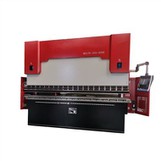
As a small press brake supplier, we offer a range of high - quality machines. Our Manual Press Brake Bending Machine is a great option for those who need a simple and reliable machine for light - duty bending tasks. It's easy to operate and maintain, making it perfect for small workshops.


If you're looking for more advanced features, our CNC Hydraulic Press Brake is the way to go. With its computer - controlled system, you can achieve precise and consistent bending results every time.
And for those who need to bend steel sheets, our CNC Steel Sheet Press Brake Machine is specifically designed for this purpose. It offers high - speed operation and excellent accuracy.
Conclusion
Adjusting the parallelism of the upper and lower dies in a small press brake is not as complicated as it might seem. By following these steps and using the right tools, you can ensure that your press brake is producing high - quality bent parts.
If you're in the market for a small press brake or have any questions about parallelism adjustment, don't hesitate to contact us. We're here to help you find the perfect machine for your needs and provide you with all the support you need to keep it running smoothly.
References
- "Press Brake Operator's Manual" - Generic press brake manual for basic operation and adjustment information.
- "Manufacturing Technology Handbook" - A comprehensive handbook on various manufacturing processes including press brake operations.