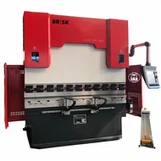
As a supplier of plate bending machines, I've witnessed firsthand the numerous advantages these machines bring to various industries. They are indispensable in metalworking, enabling the precise shaping of plates for a wide range of applications, from construction to automotive manufacturing. However, it's essential to have an honest and comprehensive discussion about the potential disadvantages of using a plate bending machine. This knowledge can help our customers make informed decisions and use these machines more effectively.
High Initial Investment
One of the most significant drawbacks of a plate bending machine is the high initial investment required. These machines are complex pieces of equipment, incorporating advanced technology and high - quality materials to ensure accurate and reliable performance. The cost of purchasing a plate bending machine can vary widely depending on its size, capacity, and features. For instance, a large - scale industrial plate bending machine with high precision and automation capabilities can cost hundreds of thousands of dollars.
This high cost can be a significant barrier for small and medium - sized enterprises (SMEs) or startups. SMEs often have limited capital, and allocating a large sum of money for a plate bending machine may strain their financial resources. It may also require them to delay other important investments, such as expanding their product lines or hiring additional staff. Even for larger companies, the high cost means a long payback period, and they need to carefully assess whether the investment will generate sufficient returns in the long run.
Space Requirements
Plate bending machines, especially those designed for heavy - duty applications, are large and bulky. They require a significant amount of floor space in the workshop. This can be a problem for businesses with limited workspace. For example, in a small metalworking shop, installing a plate bending machine may leave little room for other essential equipment or for workers to move around safely.
Moreover, the space requirements are not just limited to the machine itself. Adequate space is also needed for loading and unloading materials, as well as for maintenance and repair work. This means that businesses may need to either expand their existing facilities or find a new, larger workspace, which can incur additional costs such as rent, construction, and utilities.
Maintenance and Repair Complexity
Maintaining and repairing a plate bending machine is a complex and challenging task. These machines have numerous moving parts, such as rollers, gears, and hydraulic systems, which are subject to wear and tear over time. Regular maintenance is essential to ensure the machine's optimal performance and longevity. However, the maintenance process often requires specialized knowledge and skills.
For example, the hydraulic system of a plate bending machine needs to be regularly checked for leaks, and the hydraulic fluid needs to be changed at appropriate intervals. The rollers, which are in direct contact with the plates being bent, need to be inspected for wear and alignment. Any misalignment or excessive wear can lead to inaccurate bending results.
In case of a breakdown, repair work can be even more complicated. Identifying the root cause of the problem may require advanced diagnostic tools and expertise. Sometimes, replacement parts may need to be ordered from the manufacturer, which can take time and may cause production delays. This complexity often means that businesses need to either hire specialized technicians or rely on the manufacturer's after - sales service, both of which can be costly.
Limited Material Compatibility
While plate bending machines are designed to work with a variety of metals, there are still limitations in terms of material compatibility. Different metals have different physical properties, such as hardness, ductility, and elasticity. Some metals, like high - strength steel or certain alloys, can be extremely difficult to bend using a standard plate bending machine.
For example, high - strength steel has a high yield strength, which means it requires more force to deform. If the machine is not powerful enough, it may not be able to bend the steel plate to the desired shape. Additionally, some metals may be prone to cracking or fracturing during the bending process, especially if the bending radius is too small. This can lead to product defects and waste of materials.
Even for more common metals like mild steel, the thickness of the plate also matters. A plate bending machine has a maximum thickness capacity, and attempting to bend a plate that is thicker than this capacity can damage the machine and produce poor - quality results.
Noise and Vibration
Plate bending machines generate a significant amount of noise and vibration during operation. The noise is mainly caused by the mechanical movement of the machine, such as the rotation of the rollers and the operation of the hydraulic system. The vibration is a result of the force applied to the plate during the bending process.
High - level noise can be a health hazard for workers. Prolonged exposure to loud noise can cause hearing loss, stress, and other health problems. To protect workers' health, businesses need to provide appropriate hearing protection equipment, such as earplugs or earmuffs.
Vibration can also have a negative impact on the machine itself and the surrounding environment. Excessive vibration can loosen the machine's components over time, leading to increased wear and tear and potential breakdowns. It can also affect the accuracy of the bending process, as the vibration may cause the plate to shift slightly during bending. In addition, the vibration can be transmitted to the floor and other equipment in the workshop, potentially causing damage to them.
Operator Skill Requirements
Operating a plate bending machine requires a certain level of skill and training. The operator needs to have a good understanding of the machine's functions, controls, and safety procedures. They also need to be able to read and interpret technical drawings to ensure that the plates are bent to the correct specifications.


For example, setting the correct bending angle and radius requires precise adjustment of the machine's parameters. If the operator makes a mistake in setting these parameters, it can result in inaccurate bending and defective products. Moreover, the operator needs to be able to handle different types of materials and plates, taking into account their physical properties and potential issues during the bending process.
Training an operator to become proficient in using a plate bending machine can take time and resources. This can be a challenge for businesses, especially those with high turnover rates or a shortage of skilled workers.
Despite these disadvantages, plate bending machines remain an essential tool in many industries. At [Our Company], we offer a wide range of plate bending machines, including the Four-roller Plate Bending Machine and 4 Roller Plate Bending Machine, which are designed to minimize these drawbacks through advanced technology and high - quality construction.
If you are considering purchasing a plate bending machine, we encourage you to contact us for a detailed discussion. Our team of experts can help you choose the right machine for your specific needs, taking into account the potential disadvantages and how to overcome them. We are committed to providing you with the best solutions and support to ensure the success of your business.
References
- Smith, J. (2018). Metalworking Machinery: Principles and Applications. Publisher XYZ.
- Johnson, R. (2020). Hydraulic Systems in Industrial Equipment. ABC Publishing.
- Brown, A. (2019). Safety in the Metalworking Industry. DEF Press.