What is the cutting smoothness of a metal guillotine?
As a seasoned supplier of metal guillotines, I've witnessed firsthand the critical role that cutting smoothness plays in the metal - working industry. Cutting smoothness refers to the quality of the cut surface produced by a metal guillotine. A smooth cut is characterized by a clean, burr - free edge, minimal deformation of the metal sheet, and consistent dimensions across the cut length.


Factors Affecting Cutting Smoothness
Blade Quality
The blades of a metal guillotine are its most crucial components when it comes to cutting smoothness. High - quality blades are made from premium tool steels that are heat - treated to achieve the right balance of hardness and toughness. Harder blades can maintain their sharpness for longer periods, resulting in cleaner cuts. For example, blades with a high Rockwell hardness rating can slice through metal sheets with less resistance, reducing the likelihood of rough edges or burrs.
Regular blade maintenance is also essential. Over time, blades can become dull due to continuous use. Dull blades tend to crush the metal rather than cut it cleanly, leading to jagged edges and uneven cuts. By sharpening or replacing the blades at appropriate intervals, we can ensure consistent cutting smoothness.
Machine Precision
The precision of the metal guillotine itself significantly impacts cutting smoothness. A well - built machine with tight tolerances in its mechanical components can make more accurate cuts. For instance, the parallelism between the upper and lower blades is crucial. If the blades are not parallel, the cutting force will be unevenly distributed along the cut line, causing one side of the cut to be smoother than the other.
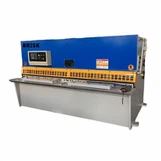
The backgauge system, which positions the metal sheet for cutting, also needs to be highly accurate. Any errors in the backgauge positioning can lead to variations in the cut length and potentially affect the smoothness of the cut. Modern industrial CNC hydraulic shearing machines, like the ones available at Industrial CNC Hydraulic Shearing Machine, are designed with advanced control systems to ensure high - precision cutting operations.
Material Properties
The type and properties of the metal being cut also play a role in cutting smoothness. Different metals have varying levels of hardness, ductility, and grain structure. For example, softer metals like aluminum are generally easier to cut smoothly compared to harder metals like stainless steel. The thickness of the metal sheet is another important factor. Thicker sheets require more cutting force, and if the machine is not properly calibrated, it can result in a rougher cut.
The grain direction of the metal can also affect the cut quality. Cutting against the grain may cause more tearing and rougher edges compared to cutting along the grain. Understanding the material properties and adjusting the cutting parameters accordingly is essential for achieving optimal cutting smoothness.
Importance of Cutting Smoothness
Product Quality
In the manufacturing industry, the quality of the final product is directly related to the quality of the individual components. A smooth cut on a metal sheet ensures that the part fits precisely into the assembly, reducing the need for additional finishing operations. For example, in the automotive industry, metal parts with smooth - cut edges are less likely to cause problems during the assembly process, resulting in a more reliable and high - quality vehicle.
Efficiency
Smooth cutting reduces the amount of post - processing required. When the cut edges are clean and burr - free, there is no need for extensive grinding or deburring, which saves time and labor costs. This increased efficiency can translate into higher production rates and lower overall manufacturing costs. For metal fabricators, being able to produce smooth - cut parts quickly gives them a competitive edge in the market.
Safety
Rough - cut edges can be a safety hazard in many applications. Workers handling metal parts with sharp burrs are at risk of cuts and injuries. By ensuring cutting smoothness, we can create a safer working environment. Additionally, in applications where the metal parts are used in consumer products, smooth edges reduce the risk of harm to the end - users.
Achieving Optimal Cutting Smoothness
Proper Machine Setup
Before starting the cutting process, it is essential to set up the metal guillotine correctly. This includes adjusting the blade clearance according to the thickness and type of the metal being cut. The blade clearance is the distance between the upper and lower blades, and it needs to be carefully calibrated to ensure a clean cut. If the clearance is too large, the metal may be crushed rather than cut, resulting in a rough edge. If the clearance is too small, the blades may wear out quickly or even break.
The cutting speed also needs to be optimized. Cutting too fast can cause the blades to overheat and wear out prematurely, while cutting too slowly may result in a less - than - smooth cut. By following the manufacturer's guidelines and conducting test cuts, we can determine the optimal cutting speed for different materials and thicknesses.
Operator Training
Skilled operators are crucial for achieving optimal cutting smoothness. Operators should be trained to understand the machine's capabilities, adjust the cutting parameters correctly, and perform routine maintenance tasks. They should also be able to identify potential problems, such as blade wear or misalignment, and take appropriate action in a timely manner.
Regular training programs can keep operators updated on the latest techniques and best practices for using metal guillotines. This not only improves the quality of the cuts but also extends the lifespan of the machine.
Our Range of Metal Guillotines
At our company, we offer a wide range of metal guillotines designed to meet the diverse needs of the metal - working industry. Our Sheet Metal Guillotine Shearing Machine is ideal for cutting thin to medium - thickness sheet metals with high precision and smoothness. It is equipped with advanced features such as a digital readout system for accurate backgauge positioning and a hydraulic blade clearance adjustment mechanism.
For more heavy - duty applications, our Metal Punching and Shearing Machine combines the functions of punching and shearing. It can handle thicker metal sheets and complex cutting operations while maintaining excellent cutting smoothness.
Contact Us for Procurement
If you are in the market for a metal guillotine that offers superior cutting smoothness, we invite you to contact us for procurement discussions. Our team of experts is ready to assist you in selecting the right machine for your specific requirements. Whether you are a small - scale metal fabricator or a large - scale industrial manufacturer, we have the solution to meet your needs.
References
- ASM Handbook, Volume 16: Machining. ASM International.
- Metalworking: Processes and Applications. McGraw - Hill Education.