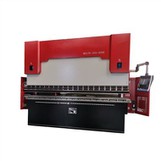
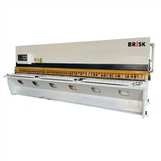
As a leading supplier of hydraulic shears, I often encounter inquiries from customers about various technical aspects of our products. One question that frequently comes up is, "What is the deformation resistance of a hydraulic shear's frame?" In this blog post, I'll delve into this topic, explaining what deformation resistance is, why it matters, and how it impacts the performance of our hydraulic shears.
Understanding Deformation Resistance
Deformation resistance refers to the ability of a material or structure to withstand external forces without undergoing significant permanent deformation. In the context of a hydraulic shear's frame, it's the frame's capacity to resist bending, twisting, or other forms of distortion when subjected to the high forces generated during the shearing process.
The frame of a hydraulic shear is a critical component that provides the structural support for the entire machine. It houses the hydraulic cylinders, blades, and other moving parts, and it must be able to maintain its shape and integrity under heavy loads. If the frame deforms, it can lead to a variety of problems, including inaccurate cuts, premature wear of the blades, and even safety hazards.
Factors Affecting Deformation Resistance
Several factors influence the deformation resistance of a hydraulic shear's frame. These include:
- Material Quality: The type of material used to construct the frame plays a significant role in its deformation resistance. High-strength steel alloys are commonly used in the manufacturing of hydraulic shear frames because they offer excellent strength and stiffness. The quality of the steel, including its chemical composition and heat treatment, can also affect its performance.
- Frame Design: The design of the frame is another crucial factor. A well-designed frame will distribute the forces evenly across its structure, minimizing stress concentrations and reducing the risk of deformation. Factors such as the shape, thickness, and reinforcement of the frame can all impact its strength and stiffness.
- Manufacturing Process: The manufacturing process used to produce the frame can also affect its deformation resistance. Precision machining, welding, and heat treatment are essential to ensure that the frame is built to the highest standards of quality and accuracy. Any defects or inconsistencies in the manufacturing process can weaken the frame and reduce its ability to resist deformation.
Importance of Deformation Resistance in Hydraulic Shears
The deformation resistance of a hydraulic shear's frame is of utmost importance for several reasons:
- Accuracy and Precision: A rigid frame is essential for maintaining the accuracy and precision of the shearing process. When the frame deforms, it can cause the blades to move out of alignment, resulting in inaccurate cuts and poor-quality finished products. By ensuring that the frame has high deformation resistance, we can guarantee that our hydraulic shears deliver consistent and precise cuts every time.
- Blade Life: Deformation of the frame can also lead to premature wear of the blades. When the frame flexes or twists, it can put additional stress on the blades, causing them to wear out more quickly. By minimizing frame deformation, we can extend the life of the blades and reduce the frequency of blade replacements, saving our customers time and money.
- Safety: A strong and rigid frame is crucial for the safety of the operator and other personnel. If the frame deforms under load, it can pose a significant safety risk, as it may cause the machine to malfunction or even collapse. By ensuring that our hydraulic shears have high deformation resistance, we can provide our customers with a safe and reliable working environment.
Our Commitment to Deformation Resistance
At our company, we are committed to providing our customers with hydraulic shears that offer superior deformation resistance. We use only the highest quality materials and state-of-the-art manufacturing processes to ensure that our frames are built to last. Our engineering team carefully designs each frame to optimize its strength and stiffness, taking into account the specific requirements of each application.
In addition to our focus on quality and design, we also conduct rigorous testing and inspection procedures to ensure that every hydraulic shear we produce meets our strict standards of performance and reliability. We use advanced testing equipment to measure the deformation resistance of our frames under various load conditions, and we make any necessary adjustments to ensure that they meet or exceed our customers' expectations.
Our Product Range
We offer a wide range of hydraulic shears to meet the diverse needs of our customers. Our product portfolio includes Automatic Hydraulic Swing Beam Shearing Machine, Benchtop Metal Shear Machine, and Aluminum Shear Cutting Machine. Each of these machines is designed with a high-strength frame to ensure maximum deformation resistance and reliable performance.
Conclusion
In conclusion, the deformation resistance of a hydraulic shear's frame is a critical factor that affects the accuracy, precision, blade life, and safety of the machine. By understanding the factors that influence deformation resistance and taking steps to optimize it, we can provide our customers with hydraulic shears that offer superior performance and reliability.
If you're in the market for a hydraulic shear, we invite you to contact us to learn more about our products and how they can meet your specific needs. Our team of experts is available to answer your questions and provide you with personalized recommendations based on your requirements. Let's work together to find the perfect hydraulic shear solution for your business.


References
- Callister, W. D., & Rethwisch, D. G. (2017). Materials Science and Engineering: An Introduction. Wiley.
- Shigley, J. E., Mischke, C. R., & Budynas, R. G. (2004). Mechanical Engineering Design. McGraw-Hill.