Hey there! As a supplier of plate rollers, I've seen firsthand how the thickness of a plate can have a huge impact on the bending process. In this blog post, I'm gonna break down the effects of plate thickness on plate rolling and share some insights that'll help you make the most of your plate rolling projects.
Let's start with the basics. When you're using a plate roller, the main goal is to bend a flat metal plate into a curved shape. This process involves passing the plate through a set of rollers that apply pressure to gradually shape it. The thickness of the plate plays a crucial role in how this process unfolds.
1. Force Requirements
One of the most obvious effects of plate thickness is the amount of force needed to bend the plate. Thicker plates require more force to deform compared to thinner ones. This is because the material in a thicker plate has more mass and greater resistance to bending.
When you're dealing with a thick plate, your plate roller needs to be powerful enough to apply the necessary force. If the machine isn't up to the task, you might end up with an incomplete bend or a distorted shape. That's why it's important to choose a plate roller that's rated for the thickness of the plates you'll be working with.
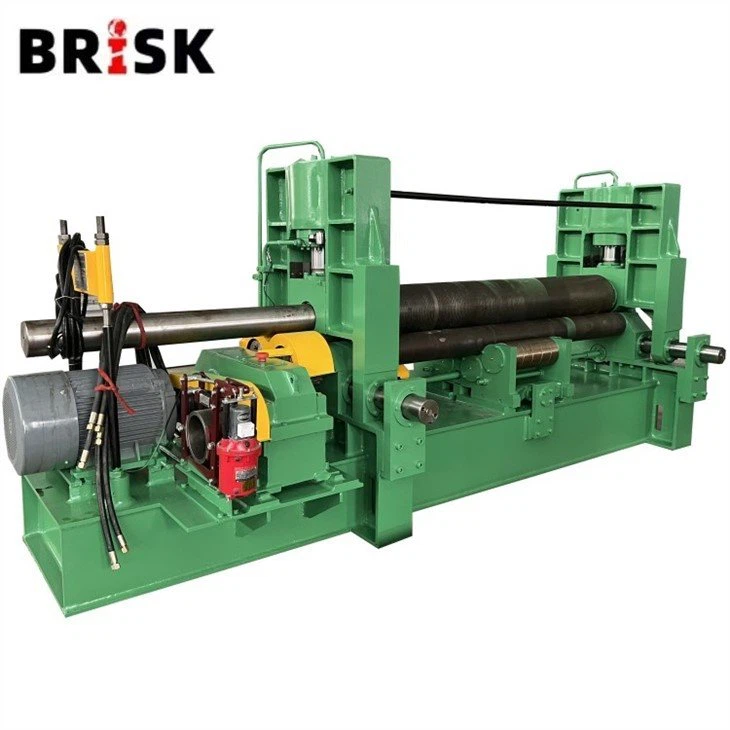
For example, if you're regularly bending plates that are 10mm thick, you'll need a more heavy - duty plate roller than if you're working with 3mm plates. Our Metal Plate Rolling Bending Machine comes in different models with varying force capacities, so you can select the one that suits your specific plate thickness requirements.
2. Bending Radius
Another significant effect of plate thickness is on the minimum bending radius. The bending radius is the inside radius of the curve that you're trying to achieve when bending the plate. Thicker plates generally require a larger minimum bending radius.
This is because as the plate gets thicker, it becomes more difficult to bend it sharply without causing cracks or other forms of damage. When you try to bend a thick plate to a very small radius, the outer surface of the plate may stretch too much, leading to fractures. On the other hand, thinner plates can be bent to smaller radii more easily.
If you need to achieve a small bending radius with a thick plate, you may need to pre - heat the plate. Pre - heating reduces the material's hardness and makes it more malleable, allowing for a smaller bending radius. However, this adds an extra step to the process and requires additional equipment.
3. Roll Life
The thickness of the plate also affects the life of the rollers in your plate roller. When you're bending thick plates, the rollers are subjected to higher levels of stress and wear. The increased force required to bend thick plates puts more pressure on the rollers, which can cause them to wear out faster.
To ensure the longevity of your rollers, it's important to maintain proper lubrication and regular maintenance. You may also need to consider using rollers made from high - quality materials that can withstand the high stress of bending thick plates. Our plate rollers are equipped with durable rollers that are designed to handle different plate thicknesses, but proper care is still essential to get the most out of them.
4. Bending Speed
Plate thickness can also influence the bending speed. Thicker plates usually take longer to bend compared to thinner ones. This is because the machine needs to apply the force gradually to ensure a smooth and accurate bend. If you try to bend a thick plate too quickly, you may end up with an uneven bend or damage to the plate.
When you're planning your production schedule, you need to take into account the time it'll take to bend different thicknesses of plates. You may need to adjust your workflow to accommodate the slower bending speed of thick plates.
5. Quality of the Bend
The quality of the bend is highly dependent on the plate thickness. With thinner plates, it's generally easier to achieve a smooth and uniform bend. The material is more flexible, and the machine can shape it more precisely.
However, when dealing with thick plates, achieving a high - quality bend can be more challenging. The increased stiffness of the material can make it difficult to control the bend, and you may end up with a bend that has some unevenness or distortion. To ensure a good - quality bend in thick plates, you need to have a well - calibrated plate roller and an experienced operator.

Tips for Bending Different Plate Thicknesses
Now that we've discussed the effects of plate thickness on the bending process, here are some tips for bending plates of different thicknesses:
-
Thin Plates:
- Use a plate roller with adjustable roller gaps to ensure precise control over the bend.
- You can bend thin plates at a relatively higher speed, but still maintain a steady feed rate to avoid any sudden movements that could cause wrinkles.
- Pay attention to the alignment of the plate to prevent any misalignment during the bending process.
-
Thick Plates:
- Make sure your plate roller has enough force capacity. Check the machine's specifications before starting the bending process.
- Pre - heat the plate if you need to achieve a smaller bending radius. Follow the recommended pre - heating temperature and time for the specific material.
- Take your time during the bending process. Apply the force gradually and monitor the bend closely to ensure it's uniform.
In conclusion, the thickness of the plate has a profound impact on every aspect of the plate bending process. Whether it's the force requirements, bending radius, roll life, bending speed, or the quality of the bend, plate thickness is a critical factor that you need to consider.
If you're in the market for a plate roller or need more information on how to handle different plate thicknesses, we're here to help. Our team of experts can assist you in choosing the right plate roller for your specific needs and provide you with all the support you need to ensure successful plate rolling projects. Don't hesitate to reach out to us for more details and to start a procurement discussion. We're looking forward to working with you!
References
- ASM Handbook, Volume 6: Welding, Brazing, and Soldering. ASM International.
- Machinery's Handbook, 31st Edition. Industrial Press Inc.