

As a seasoned supplier of plate rollers, I often encounter inquiries from customers regarding the minimum radius of curvature that these machines can achieve. This parameter is crucial for many industries, including manufacturing, construction, and automotive, where precision bending of metal plates is required. In this blog post, I will delve into the factors that influence the minimum radius of curvature and provide insights into how our [Company's Plate Roller Brand] can meet your specific bending needs.
Understanding the Concept of Radius of Curvature
Before we discuss the minimum radius of curvature, it's essential to understand what this term means. In simple terms, the radius of curvature is the radius of an imaginary circle that best approximates the curve of a bent plate at a given point. A smaller radius of curvature indicates a sharper bend, while a larger radius results in a more gradual curve.
The minimum radius of curvature is the smallest radius that a plate roller can achieve without causing excessive deformation, cracking, or other defects in the metal plate. This value is determined by several factors, including the type of material, thickness of the plate, roller diameter, and the design and capabilities of the plate roller itself.
Factors Influencing the Minimum Radius of Curvature
Material Properties
The type of material being bent plays a significant role in determining the minimum radius of curvature. Different metals have varying degrees of ductility, which is the ability of a material to deform plastically without fracturing. For example, aluminum and copper are highly ductile metals and can be bent to smaller radii compared to harder materials like stainless steel or high-strength steel.
The hardness and grain structure of the material also affect its bendability. Heat-treated or cold-rolled materials may have reduced ductility, making it more challenging to achieve small radii of curvature. Additionally, the presence of impurities or inclusions in the material can cause stress concentrations and increase the risk of cracking during bending.
Plate Thickness
The thickness of the metal plate is another critical factor. Thicker plates generally require larger radii of curvature to avoid over-stressing the material. As the plate thickness increases, the bending force required to achieve a given radius also increases. If the bending force exceeds the material's yield strength, it can lead to permanent deformation or even fracture.
For instance, a thin sheet of metal may be bent to a very small radius, while a thick plate of the same material may require a much larger radius to prevent damage. Our plate rollers are designed to handle a wide range of plate thicknesses, and we can provide guidance on the minimum radius achievable for different thicknesses.
Roller Diameter
The diameter of the rollers in the plate roller machine has a direct impact on the minimum radius of curvature. Smaller roller diameters allow for sharper bends because they can apply more concentrated force to the plate. However, using rollers that are too small can also cause excessive localized deformation and mark the surface of the plate.
Conversely, larger roller diameters are better suited for bending thicker plates or achieving larger radii of curvature. They distribute the bending force more evenly across the plate, reducing the risk of damage. Our plate rollers are equipped with high-quality rollers of various diameters to accommodate different bending requirements.

Machine Design and Capabilities
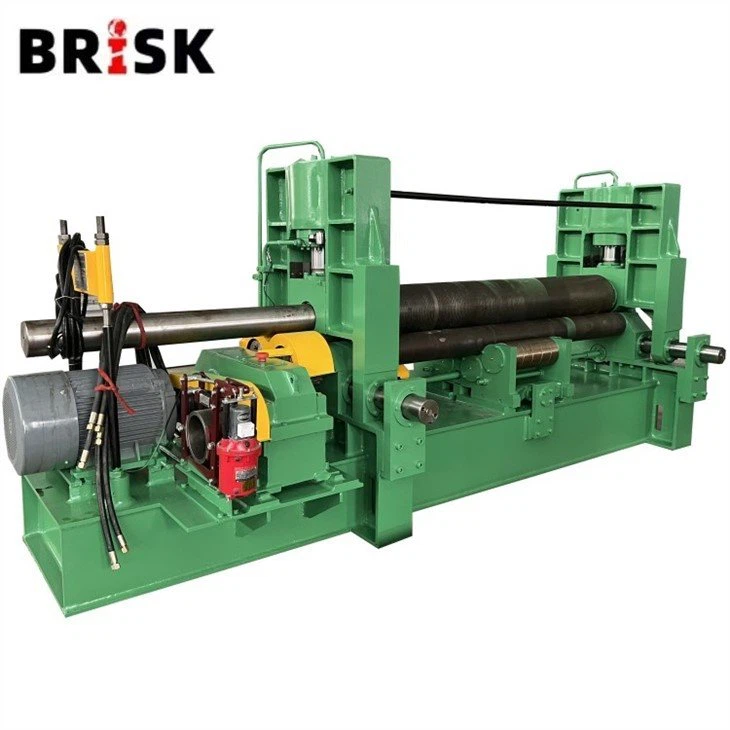
The design and capabilities of the plate roller itself are crucial in determining the minimum radius of curvature. Modern plate rollers are equipped with advanced features such as adjustable roller positions, hydraulic systems for precise control of the bending force, and digital displays for accurate measurement and adjustment.
Some plate rollers also have the ability to pre-bend the edges of the plate, which can help achieve smaller radii of curvature without the need for excessive force. Our [Company's Plate Roller Brand] is designed with state-of-the-art technology to ensure optimal performance and the ability to achieve the smallest possible radii of curvature while maintaining the integrity of the material.
Achieving the Minimum Radius of Curvature with Our Plate Rollers
At our company, we understand the importance of providing high-quality plate rollers that can meet the diverse needs of our customers. Our [Company's Plate Roller Brand] is engineered to achieve the minimum radius of curvature possible for a wide range of materials and plate thicknesses.
We offer a variety of plate roller models, each with its own specifications and capabilities. Our sales team can work closely with you to understand your specific requirements and recommend the most suitable plate roller for your application. Whether you need to bend thin sheets for decorative purposes or thick plates for structural applications, we have the solution.
In addition to our standard models, we also provide customization options to meet unique bending requirements. We can modify the roller diameters, add special features, or adjust the machine's control system to ensure that you can achieve the desired minimum radius of curvature.
Case Studies
To illustrate the capabilities of our plate rollers, let's take a look at a few case studies:
Case Study 1: Automotive Industry
A leading automotive manufacturer approached us with a requirement to bend stainless steel sheets for the production of exhaust systems. The sheets had a thickness of 1.5 mm, and they needed to achieve a minimum radius of curvature of 10 mm. Our engineers recommended our [Specific Model] plate roller, which was equipped with small-diameter rollers and a precise hydraulic control system. With our plate roller, the customer was able to achieve the desired radius of curvature without any cracking or deformation, resulting in high-quality exhaust components.
Case Study 2: Construction Industry
A construction company needed to bend thick steel plates for the fabrication of large structural components. The plates had a thickness of 20 mm, and they required a minimum radius of curvature of 150 mm. We provided them with our [Another Specific Model] plate roller, which had large-diameter rollers and a powerful hydraulic system. The machine was able to handle the thick plates with ease and achieve the required radius of curvature, ensuring the structural integrity of the components.
Conclusion
The minimum radius of curvature that a plate roller can achieve is influenced by several factors, including material properties, plate thickness, roller diameter, and machine design. As a trusted supplier of plate rollers, we are committed to providing our customers with the best solutions for their bending needs.
Our [Company's Plate Roller Brand] is designed to achieve the smallest possible radii of curvature while maintaining the quality and integrity of the bent plates. Whether you are in the automotive, construction, or any other industry, we have the expertise and experience to help you find the right plate roller for your application.
If you are interested in learning more about our plate rollers or have specific bending requirements, please don't hesitate to contact us. Our sales team is ready to assist you and provide you with detailed information and quotations. You can also visit our website to explore our range of Metal Plate Rolling Bending Machine and learn more about our products and services.
References
- ASM Handbook, Volume 6: Welding, Brazing, and Soldering, ASM International
- Metals Handbook Desk Edition, 3rd Edition, ASM International
- Plate Rolling Technology: Principles and Applications, Industrial Press Inc.


