

A plate roller, also known as a plate rolling machine, is an essential piece of equipment in various industries, especially in metalworking. As a supplier of plate rollers, I am often asked about how these machines work. In this blog post, I will provide a detailed explanation of the working principle of a plate roller, its components, and the factors that affect its performance.
Basic Working Principle
The primary function of a plate roller is to bend metal plates into cylindrical or conical shapes. This is achieved through a combination of mechanical force and precise control. The basic working principle involves passing a metal plate through a set of rollers, which apply pressure to the plate and gradually bend it to the desired curvature.
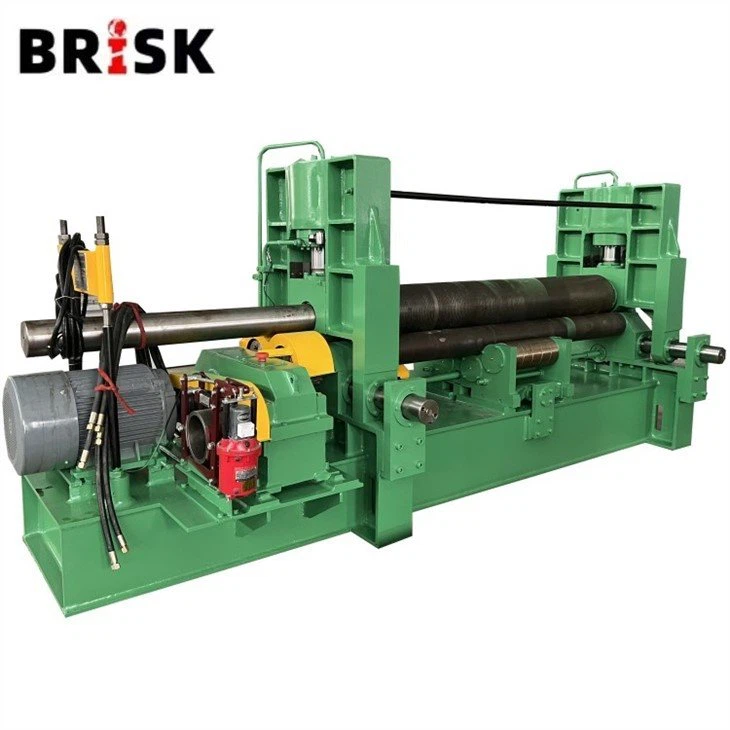
There are different types of plate rollers, including two - roll, three - roll, and four - roll machines. Among them, the three - roll plate roller is the most commonly used type. In a three - roll plate roller, there are usually two bottom rollers and one top roller. The bottom rollers are driven by a motor, which rotates them in the same direction. The top roller can be adjusted vertically to apply pressure on the metal plate placed between the rollers.
When the metal plate is fed into the machine, the rotation of the bottom rollers moves the plate forward. At the same time, the top roller presses down on the plate, causing it to bend. As the plate moves through the rollers, the bending process continues until the desired curvature is achieved.
Components of a Plate Roller
Rollers
Rollers are the most critical components of a plate roller. They are usually made of high - strength steel to withstand the high pressure and friction during the bending process. The surface of the rollers is often hardened and ground to ensure smooth operation and accurate bending.
The diameter, length, and hardness of the rollers can significantly affect the performance of the plate roller. Larger diameter rollers can handle thicker and wider plates, while harder rollers can provide more precise bending.
Drive System
The drive system is responsible for providing the power to rotate the rollers. It typically consists of an electric motor, a gearbox, and a transmission mechanism. The electric motor converts electrical energy into mechanical energy, which is then transmitted to the rollers through the gearbox and transmission mechanism.
The gearbox is used to adjust the speed and torque of the rollers according to the requirements of the bending process. Different types of gearboxes, such as helical gearboxes and worm gearboxes, can be used depending on the specific application.
Hydraulic System
In many modern plate rollers, a hydraulic system is used to control the movement of the top roller. The hydraulic system consists of a hydraulic pump, hydraulic cylinders, and control valves. The hydraulic pump generates hydraulic pressure, which is then used to drive the hydraulic cylinders.
The control valves are used to regulate the flow and pressure of the hydraulic fluid, allowing for precise control of the vertical movement of the top roller. This enables the operator to adjust the bending force and curvature of the metal plate accurately.
Control System
The control system of a plate roller is used to monitor and control the operation of the machine. It usually includes a control panel with various buttons, switches, and displays. The operator can use the control panel to set the parameters of the bending process, such as the speed of the rollers, the position of the top roller, and the number of passes.
Some advanced plate rollers are equipped with a programmable logic controller (PLC), which allows for more complex control and automation. The PLC can store different bending programs, making it easier to produce parts with consistent quality.
Factors Affecting the Performance of a Plate Roller
Plate Thickness and Material
The thickness and material of the metal plate have a significant impact on the performance of the plate roller. Thicker plates require more bending force, which means that the machine needs to have a higher power and stronger rollers. Different materials also have different mechanical properties, such as yield strength and ductility. For example, stainless steel is more difficult to bend than mild steel due to its higher yield strength.
Roller Alignment
Proper roller alignment is crucial for accurate bending. If the rollers are not aligned correctly, the metal plate may be bent unevenly, resulting in poor quality parts. Regular maintenance and inspection of the roller alignment are necessary to ensure the optimal performance of the plate roller.

Bending Radius
The bending radius is another important factor that affects the performance of the plate roller. Smaller bending radii require more force and may cause the metal plate to crack or deform. The minimum bending radius that a plate roller can achieve depends on the thickness and material of the plate, as well as the design of the machine.
Applications of Plate Rollers
Plate rollers are widely used in various industries, including:
- Construction: In the construction industry, plate rollers are used to manufacture pipes, columns, and other structural components.
- Automotive: Plate rollers are used to produce automotive parts, such as exhaust pipes and body panels.
- Shipbuilding: In the shipbuilding industry, plate rollers are used to bend large - scale metal plates for the construction of ship hulls.
- Manufacturing: Plate rollers are also used in general manufacturing to produce cylindrical and conical parts for various applications.
Our Plate Rollers
As a leading supplier of plate rollers, we offer a wide range of Metal Plate Rolling Bending Machine to meet the diverse needs of our customers. Our plate rollers are designed with advanced technology and high - quality components to ensure reliable performance and accurate bending.
We have a team of experienced engineers and technicians who can provide professional advice and support to our customers. Whether you need a small - scale plate roller for a workshop or a large - scale machine for an industrial production line, we can offer you the most suitable solution.
Conclusion
In conclusion, a plate roller is a complex and sophisticated machine that plays a vital role in the metalworking industry. By understanding the working principle, components, and factors affecting its performance, you can make a more informed decision when choosing a plate roller for your application.
If you are interested in our plate rollers or have any questions about the bending process, please feel free to contact us. We are always ready to help you with your procurement needs and provide you with the best solutions.
References
- Kalpakjian, S., & Schmid, S. R. (2008). Manufacturing Engineering and Technology. Pearson Prentice Hall.
- Dieter, G. E. (1986). Mechanical Metallurgy. McGraw - Hill.


