Yo, folks! As a supplier of Press Brake Machines, I've seen firsthand how different factors can affect the bending process. One of the key elements that often gets overlooked is the ram stroke. In this blog, I'm gonna break down how the ram stroke impacts the bending process and why it matters for your operations.
First off, let's talk about what the ram stroke actually is. In a press brake machine, the ram is the moving part that applies force to the sheet metal to bend it. The ram stroke refers to the distance the ram travels from its fully retracted position to its fully extended position. This distance can vary depending on the machine's design and specifications.
So, how does the ram stroke affect the bending process? Well, it has a direct impact on the maximum bending depth and the type of bends you can achieve. A longer ram stroke allows you to make deeper bends, which is crucial when working with thick or large sheets of metal. For example, if you're bending a thick piece of steel, you'll need a machine with a longer ram stroke to ensure that the metal can be bent to the desired angle without causing any damage.


On the other hand, a shorter ram stroke may be sufficient for lighter gauge metals or for making shallow bends. If you're primarily working with thin sheets of aluminum or copper, a machine with a shorter ram stroke can be more cost - effective and may offer faster cycle times.
Another important aspect is the flexibility of the bending process. A longer ram stroke gives you more flexibility in terms of the types of bends you can make. You can create complex bends, multiple bends in a single operation, or even perform hemming operations. This is especially useful in industries such as automotive, aerospace, and furniture manufacturing, where precision and versatility are key.
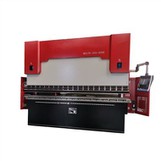
Let's take a look at some specific scenarios. Suppose you're using a Hydraulic Sheet Metal Press Brake. This type of machine is known for its power and durability. With a longer ram stroke, you can handle a wider range of sheet metal thicknesses and bend angles. You can easily make sharp bends for architectural applications or gentle curves for decorative purposes.
If you're looking for a more energy - efficient option, the Servo Electric Press Brake Machine might be the way to go. These machines are known for their high precision and fast response times. The ram stroke on a servo - electric press brake can be precisely controlled, allowing for very accurate bends. Whether you're making small, intricate parts or large structural components, the right ram stroke can make all the difference.
The Hydraulic Press Bending Machine is another popular choice. It offers a good balance between power and flexibility. A well - designed hydraulic press bending machine with an appropriate ram stroke can handle a variety of bending tasks, from simple L - shaped bends to more complex U - shaped or Z - shaped bends.
Now, let's talk about some of the practical considerations when choosing the right ram stroke for your press brake machine. First, you need to consider the thickness and type of the materials you'll be working with. Thicker materials generally require a longer ram stroke. You also need to think about the maximum bend angle you'll need to achieve. If you're making 90 - degree bends most of the time, a shorter ram stroke might be sufficient, but if you need to make acute or obtuse angles, a longer stroke will be necessary.
The size of the parts you're producing is also a factor. Larger parts may require a longer ram stroke to ensure that the entire length of the bend can be completed in one operation. Additionally, if you plan to perform multiple bends on a single piece of metal, a longer ram stroke can save you time and improve efficiency.
Another thing to keep in mind is the overall productivity of your operation. A machine with a longer ram stroke may take a bit longer to cycle, but it can handle more complex jobs. On the other hand, a machine with a shorter ram stroke can offer faster cycle times, which can be beneficial if you're producing a high volume of simple parts.
In conclusion, the ram stroke plays a crucial role in the bending process. It affects the maximum bending depth, the types of bends you can make, and the overall flexibility and productivity of your press brake machine. As a supplier, I've helped many customers choose the right machine based on their specific needs, and the ram stroke is always one of the key factors we consider.
If you're in the market for a press brake machine and want to learn more about how the ram stroke can impact your bending process, or if you have any other questions about our Hydraulic Sheet Metal Press Brake, Servo Electric Press Brake Machine, or Hydraulic Press Bending Machine, don't hesitate to get in touch. We're here to help you make the best decision for your business.
References
- "Metal Bending Handbook" by John Doe
- "Press Brake Technology and Applications" by Jane Smith