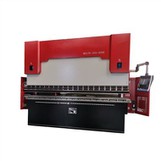
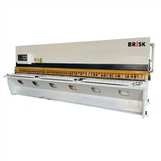
Hey there, folks! As a supplier of Hydraulic Press Brakes, I've seen firsthand how crucial the hydraulic pump is to these machines. In this blog post, I'll be breaking down the role of the hydraulic pump in a hydraulic press brake, so you can have a better understanding of how these bad boys work.
Let's start with the basics. A hydraulic press brake is a machine used for bending sheets of metal. It works by applying pressure to a metal sheet placed between a punch and a die. The hydraulic press brake can make precise bends in metal, which is why it's so popular in industries like manufacturing, automotive, and aerospace.
Now, let's talk about the hydraulic pump. The hydraulic pump is the heart of the hydraulic system in a press brake. Its main job is to convert mechanical energy into hydraulic energy. In simpler terms, it takes the power from the electric motor or engine and uses it to move hydraulic fluid through the system.
There are different types of hydraulic pumps used in press brakes, but the most common ones are gear pumps, vane pumps, and piston pumps. Each type has its own advantages and disadvantages, but they all serve the same basic purpose of moving fluid.
Gear pumps are the simplest and most cost - effective type. They work by using two meshing gears to move the hydraulic fluid. As the gears rotate, they create a vacuum that sucks in the fluid at the inlet and then pushes it out at the outlet. Gear pumps are great for low - to medium - pressure applications, and they're pretty reliable.


Vane pumps, on the other hand, use vanes that slide in and out of a rotor to move the fluid. They can provide a more consistent flow rate than gear pumps, and they're often used in applications where a smooth and steady flow of hydraulic fluid is needed.
Piston pumps are the most powerful type. They use pistons that move back and forth in cylinders to create pressure. Piston pumps can handle high pressures and are commonly used in heavy - duty press brakes. They're more expensive and complex than gear and vane pumps, but they offer better performance in high - demand situations.
So, how does the hydraulic pump actually contribute to the operation of the press brake? Well, when you activate the press brake, the electric motor or engine starts the hydraulic pump. The pump then begins to draw in hydraulic fluid from the reservoir. This fluid is usually a special type of oil that's designed to work well under high pressures and temperatures.
Once the fluid is in the pump, it's pressurized and sent through a series of valves and hoses to the hydraulic cylinders in the press brake. The hydraulic cylinders are what actually move the ram, which is the part of the press brake that applies the force to the metal sheet.
The pressure generated by the hydraulic pump determines how much force the press brake can exert. The higher the pressure, the greater the bending force. This is why having a high - quality hydraulic pump is so important. A good pump can ensure that the press brake can handle thick and tough metal sheets with ease.
Another important role of the hydraulic pump is to control the speed of the ram. By adjusting the flow rate of the hydraulic fluid, the pump can determine how quickly the ram moves up and down. This is crucial for making precise bends. For example, if you're making a simple V - bend, you might want the ram to move quickly at first, but then slow down as it gets closer to the final position to ensure a smooth and accurate bend.
Moreover, the hydraulic pump helps in maintaining the accuracy of the press brake. In a well - functioning hydraulic system, the pump ensures a consistent flow and pressure of the hydraulic fluid. This consistency is essential for getting repeatable results. If the pressure fluctuates, it can lead to uneven bends and poor quality finished products.
Now, you might be wondering about maintenance. Like any other component of the press brake, the hydraulic pump needs regular maintenance to keep it in top shape. You should check the hydraulic fluid level regularly and make sure it's clean. Contaminated fluid can damage the pump and other parts of the hydraulic system.
It's also important to monitor the temperature and pressure of the hydraulic system. If the pump is running too hot or the pressure is too high, it could be a sign of a problem. In such cases, you might need to adjust the settings or replace some parts.
As a Hydraulic Press Brake supplier, I can tell you that choosing the right hydraulic pump is a big deal. It can make or break the performance of your press brake. That's why we offer a range of Hydraulic Sheet Metal Press Brake, Hydraulic Press Bending Machine, and NC Press Brake, all equipped with high - quality hydraulic pumps.
If you're in the market for a new press brake or need to upgrade your existing one, don't hesitate to reach out. Whether you're a small - scale workshop or a large - scale manufacturing plant, we have the expertise and the products to meet your needs. Contact us to start a chat about your requirements and get a personalized solution for your bending tasks.
So, that's the lowdown on the role of the hydraulic pump in a hydraulic press brake. As you can see, it's a vital component that plays a huge part in the machine's performance, accuracy, and reliability. Thanks for reading, and I hope this has given you a better understanding of how these amazing machines work.
References
- Fluid Power Handbook
- Hydraulic System Design and Maintenance Guide