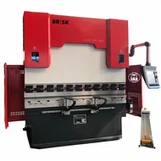
When it comes to metal fabrication, a hydraulic press brake is an indispensable tool. As a seasoned hydraulic press brake supplier, I've witnessed firsthand the impact of choosing the right machine on a business's efficiency and productivity. In this blog, I'll share some essential factors to consider when selecting the perfect hydraulic press brake for your specific needs.
Understanding Your Bending Requirements
The first step in choosing a hydraulic press brake is to clearly understand your bending requirements. This involves evaluating the type of materials you'll be working with, the thickness and length of the sheets, and the complexity of the bends you need to make.


- Material Type: Different materials have varying degrees of ductility and hardness, which can significantly affect the bending process. For example, stainless steel is more difficult to bend than mild steel due to its higher strength and lower ductility. Make sure the press brake you choose is capable of handling the specific materials you'll be working with.
- Material Thickness and Length: The thickness and length of the sheets you'll be bending will determine the required tonnage and bed length of the press brake. Generally, thicker and longer sheets require higher tonnage and longer beds. It's important to choose a press brake with sufficient capacity to handle your maximum material thickness and length.
- Bend Complexity: If you need to make complex bends, such as multiple bends or acute angles, you'll need a press brake with advanced features, such as CNC controls and multi-axis backgauge systems. These features allow for greater precision and flexibility in the bending process.
Types of Hydraulic Press Brakes
There are several types of hydraulic press brakes available on the market, each with its own advantages and disadvantages. Here are the most common types:
- Mechanical Press Brakes: Mechanical press brakes are the most traditional type of press brake. They use a mechanical flywheel and clutch system to generate the bending force. Mechanical press brakes are known for their high speed and reliability, but they are less precise than hydraulic press brakes and are not suitable for making complex bends.
- Hydraulic Press Brakes: Hydraulic press brakes use hydraulic cylinders to generate the bending force. They are more precise and flexible than mechanical press brakes and are suitable for making a wide range of bends. Hydraulic press brakes can be further classified into two types: single-acting and double-acting. Single-acting hydraulic press brakes use a single hydraulic cylinder to generate the bending force, while double-acting hydraulic press brakes use two hydraulic cylinders to generate the bending force.
- CNC Press Brakes: CNC press brakes are the most advanced type of press brake. They use computer numerical control (CNC) technology to control the bending process. CNC press brakes offer greater precision, flexibility, and productivity than mechanical and hydraulic press brakes. They are suitable for making complex bends and can be programmed to perform multiple bends automatically.
Key Features to Consider
When choosing a hydraulic press brake, there are several key features to consider. These features can affect the performance, efficiency, and safety of the press brake. Here are some of the most important features to look for:
- Tonnage: The tonnage of a press brake refers to the maximum bending force it can generate. It's important to choose a press brake with sufficient tonnage to handle your maximum material thickness and length.
- Bed Length: The bed length of a press brake refers to the length of the worktable. It's important to choose a press brake with a bed length that is long enough to accommodate your maximum material length.
- Backgauge System: The backgauge system of a press brake is used to position the material accurately for bending. A good backgauge system should be easy to use, accurate, and flexible. Some backgauge systems offer multi-axis control, which allows for greater precision and flexibility in the bending process.
- CNC Controls: CNC controls are an important feature of modern press brakes. They allow for greater precision, flexibility, and productivity in the bending process. CNC controls can be programmed to perform multiple bends automatically, which can save time and reduce labor costs.
- Safety Features: Safety is always a top priority when working with hydraulic press brakes. Look for a press brake with safety features, such as light curtains, safety guards, and emergency stop buttons. These features can help prevent accidents and injuries in the workplace.
Evaluating the Manufacturer
In addition to considering the features and specifications of the press brake, it's also important to evaluate the manufacturer. A reputable manufacturer will offer high-quality products, excellent customer service, and reliable technical support. Here are some factors to consider when evaluating a manufacturer:
- Reputation: Look for a manufacturer with a good reputation in the industry. You can check online reviews and testimonials from other customers to get an idea of the manufacturer's reputation.
- Experience: Choose a manufacturer with extensive experience in manufacturing hydraulic press brakes. An experienced manufacturer will have a better understanding of the industry and will be able to provide you with high-quality products and reliable technical support.
- Customer Service: A good manufacturer will offer excellent customer service. They should be responsive to your inquiries and should be able to provide you with timely support and assistance.
- Technical Support: Look for a manufacturer that offers reliable technical support. They should have a team of experienced technicians who can provide you with training, troubleshooting, and maintenance services.
Cost Considerations
Cost is always an important factor when choosing a hydraulic press brake. However, it's important to remember that the cheapest option is not always the best option. When evaluating the cost of a press brake, you should consider the following factors:
- Initial Purchase Price: The initial purchase price of the press brake is an important factor to consider. However, you should also consider the long-term cost of ownership, including maintenance, repair, and operating costs.
- Maintenance and Repair Costs: Hydraulic press brakes require regular maintenance and occasional repairs. Make sure you choose a press brake that is easy to maintain and repair, and that has readily available replacement parts.
- Operating Costs: The operating costs of a press brake include electricity, hydraulic fluid, and tooling costs. Make sure you choose a press brake that is energy-efficient and that uses cost-effective tooling.
Conclusion
Choosing the right hydraulic press brake is a critical decision that can have a significant impact on your business's efficiency and productivity. By considering the factors outlined in this blog, you can make an informed decision and choose a press brake that meets your specific needs and budget.
If you're in the market for a hydraulic press brake, I encourage you to contact us to learn more about our products and services. As a leading hydraulic press brake supplier, we offer a wide range of high-quality press brakes, including NC Press Brake, Hydraulic Sheet Metal Press Brake, and CNC Hydraulic Metal Sheet Bending Machine. Our team of experienced professionals will work with you to understand your needs and recommend the best press brake for your application. We look forward to hearing from you!
References
- ASM Handbook, Volume 14A: Metalworking: Bending and Forming. ASM International, 2013.
- Metal Forming Handbook: A Practical Guide to Sheet Metal Forming Processes and Die Design. Society of Manufacturing Engineers, 2008.
- Press Brake Operation and Safety Manual. Various manufacturers.