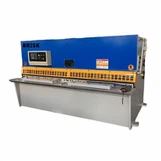
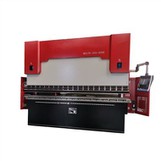
As a leading supplier of sheet metal press brakes, I often get asked about the types of materials that our machines can bend. The versatility of a sheet metal press brake is one of its most significant advantages, allowing it to work with a wide range of materials to meet diverse manufacturing needs. In this blog post, I'll explore the various materials that a sheet metal press brake can handle, highlighting their properties and applications.


Mild Steel
Mild steel is one of the most commonly bent materials using a sheet metal press brake. It is a low - carbon steel with excellent ductility, which means it can be easily deformed without cracking. This property makes it ideal for a variety of applications, from simple brackets to complex automotive parts. Mild steel is also relatively inexpensive, making it a cost - effective choice for many manufacturers.
Our CNC Hydraulic Press Brake is particularly well - suited for bending mild steel. The precise control of the hydraulic system ensures accurate bends, and the high - tonnage capacity can handle thick sheets of mild steel. Whether you're producing small components or large structural parts, our press brake can deliver consistent results.
Stainless Steel
Stainless steel is another popular material for press brake bending. It is known for its corrosion resistance, strength, and aesthetic appeal. There are different grades of stainless steel, such as 304 and 316, each with its own unique properties.
304 stainless steel is the most widely used grade. It has good formability and is suitable for a variety of applications, including kitchen equipment, architectural features, and automotive trim. 316 stainless steel, on the other hand, has better corrosion resistance, especially in marine environments, and is often used in the production of offshore equipment and medical devices.
When bending stainless steel, it's important to use the right tooling and settings. Stainless steel is harder than mild steel, so it requires more force to bend. Our CNC Steel Sheet Press Brake Machine is equipped with high - quality tooling and advanced control systems to ensure precise bending of stainless steel sheets. The machine can adjust the bending force and speed according to the thickness and grade of the stainless steel, minimizing the risk of cracking or surface damage.
Aluminum
Aluminum is a lightweight and corrosion - resistant material that is widely used in the aerospace, automotive, and construction industries. It has excellent formability, which means it can be bent into complex shapes with relative ease.
One of the advantages of using aluminum is its high strength - to - weight ratio. This makes it an ideal choice for applications where weight reduction is crucial, such as aircraft wings and automotive body panels. Another benefit is its recyclability, which makes it an environmentally friendly option.
Our Small Electric Press Brake Machine is perfect for bending aluminum sheets. The electric drive system provides smooth and precise bending, and the machine's compact design makes it suitable for small - scale production or workshops with limited space. Whether you're working with thin aluminum foils or thick plates, our press brake can handle the job efficiently.
Copper and Brass
Copper and brass are both metals with good electrical conductivity and malleability. Copper is commonly used in electrical wiring, plumbing, and heat exchangers, while brass, an alloy of copper and zinc, is often used in decorative applications, musical instruments, and hardware.
When bending copper and brass, it's important to consider their softness. These materials are more prone to scratching and marring, so special care must be taken during the bending process. Our press brakes are designed with smooth - surfaced tooling to minimize surface damage. The adjustable bending parameters allow for precise control, ensuring that the bends are accurate and the material's integrity is maintained.
Titanium
Titanium is a strong, lightweight, and corrosion - resistant metal that is used in high - performance applications, such as aerospace, medical implants, and sports equipment. However, bending titanium can be challenging due to its high strength and low ductility compared to other metals.
Specialized tooling and high - tonnage press brakes are required to bend titanium effectively. Our advanced press brake models are capable of handling titanium sheets. The machine's control system can be programmed to apply the appropriate amount of force and speed during the bending process, taking into account the unique properties of titanium. This ensures that the bends are of high quality and meet the strict requirements of industries that use titanium.
Considerations for Material Bending
When bending different materials, several factors need to be considered to ensure successful results.
Thickness
The thickness of the material plays a crucial role in determining the bending force required. Thicker materials generally require more force to bend. Our press brakes are designed with adjustable tonnage settings, allowing operators to select the appropriate force based on the material thickness.
Grain Direction
The grain direction of the material can affect the bending process. Bending against the grain can increase the risk of cracking, especially in materials like stainless steel and aluminum. It's important to identify the grain direction before bending and adjust the bending direction accordingly.
Tooling
The choice of tooling is also important. Different materials may require different types of tooling to achieve the best results. For example, softer materials like aluminum may require tooling with a smooth surface to prevent scratching, while harder materials like titanium may need tooling made from high - strength alloys.
Springback
Springback is the tendency of the material to return to its original shape after bending. Different materials have different springback characteristics. Our press brakes are equipped with advanced control systems that can compensate for springback, ensuring that the final bend angle is accurate.
In conclusion, a sheet metal press brake is a versatile machine that can bend a wide range of materials, including mild steel, stainless steel, aluminum, copper, brass, and titanium. As a supplier of sheet metal press brakes, we offer a variety of models to suit different materials, thicknesses, and production requirements. Whether you're a small - scale manufacturer or a large industrial enterprise, our press brakes can help you achieve high - quality bending results.
If you're interested in learning more about our sheet metal press brakes or have specific requirements for your material bending needs, we encourage you to contact us for a detailed discussion. Our team of experts is ready to assist you in finding the right press brake solution for your business.
References
- ASM Handbook, Volume 14A: Metalworking: Bending and Forming. ASM International.
- Metals Handbook Desk Edition, Third Edition. ASM International.
- "Sheet Metal Bending Handbook" by Peter Ulintz.