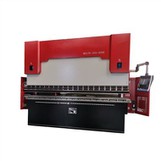
Hey there! As a supplier of Hydraulic Press Brakes, I've had my fair share of conversations with customers about the ins and outs of these machines. One question that often pops up is, "What are the environmental requirements for using a hydraulic press brake?" Well, let's dive right in and break it down.
Temperature and Humidity
First off, temperature and humidity play a huge role in how well a hydraulic press brake performs. You see, these machines rely on hydraulic fluid to operate, and that fluid's viscosity can change depending on the temperature. If it's too cold, the fluid can become thick and sluggish, making the machine work harder and potentially causing damage over time. On the other hand, if it's too hot, the fluid can thin out, leading to leaks and reduced efficiency.
Ideally, you want to keep the operating temperature of your hydraulic press brake between 50°F and 104°F (10°C and 40°C). This range ensures that the hydraulic fluid maintains its proper viscosity, allowing the machine to run smoothly. As for humidity, it's best to keep it below 80%. High humidity can lead to corrosion, which can damage the machine's components and shorten its lifespan.
Ventilation
Another important environmental factor is ventilation. Hydraulic press brakes generate a fair amount of heat during operation, and without proper ventilation, that heat can build up and cause problems. Good ventilation helps to dissipate the heat, keeping the machine cool and preventing overheating.
When setting up your hydraulic press brake, make sure there's plenty of space around it for air to circulate. You might also consider installing exhaust fans or a ventilation system to help remove hot air from the area. This not only protects the machine but also creates a more comfortable working environment for your operators.
Dust and Debris
Dust and debris can be a real nuisance when it comes to hydraulic press brakes. These particles can get into the machine's moving parts, causing wear and tear and potentially leading to breakdowns. To prevent this, it's important to keep the work area clean and free of dust and debris.
Regularly sweep and vacuum the floor around the machine, and use a compressed air gun to blow out any dust that might have accumulated inside the machine. You might also want to consider installing a dust collection system to capture dust and debris as it's generated. This can help to keep the air clean and reduce the risk of damage to the machine.
Power Supply
The power supply is another crucial aspect of the environment in which a hydraulic press brake operates. These machines require a stable and reliable power source to function properly. Fluctuations in voltage or power outages can cause the machine to malfunction, leading to costly repairs and downtime.
Before installing your hydraulic press brake, make sure that your electrical system can handle the machine's power requirements. You might need to consult with an electrician to ensure that the wiring and circuit breakers are appropriate for the machine. It's also a good idea to use a surge protector to protect the machine from power spikes.


Noise and Vibration
Hydraulic press brakes can be quite noisy and generate a fair amount of vibration during operation. This can not only be a nuisance for your operators but also cause damage to the machine and the surrounding equipment. To reduce noise and vibration, you can take a few steps.
First, make sure the machine is properly installed on a stable surface. This can help to minimize vibration. You might also consider using vibration isolation pads or mounts to further reduce the impact of vibration. As for noise, you can install soundproofing materials around the machine or use ear protection for your operators.
Why Choose Our Hydraulic Press Brakes?
At our company, we understand the importance of these environmental requirements. That's why our CNC Hydraulic Metal Sheet Bending Machine is designed to operate efficiently and reliably in a wide range of environmental conditions. Our Hydraulic Press Brake Machine is built with high-quality components that are resistant to temperature, humidity, dust, and debris. And our Servo Electric Press Brake Machine is designed to be energy-efficient and quiet, making it a great choice for any workspace.
If you're in the market for a hydraulic press brake, we'd love to talk to you. Our team of experts can help you choose the right machine for your needs and provide you with all the information you need to ensure its proper installation and operation. Whether you're a small business or a large manufacturing facility, we have the solution for you.
Conclusion
In conclusion, the environmental requirements for using a hydraulic press brake are crucial for its proper operation and longevity. By paying attention to temperature, humidity, ventilation, dust and debris, power supply, and noise and vibration, you can ensure that your machine runs smoothly and efficiently. At our company, we're committed to providing high-quality hydraulic press brakes that meet these environmental requirements. So, if you're looking for a reliable and efficient hydraulic press brake, look no further. Contact us today to learn more about our products and how we can help you with your bending needs.
References
- "Hydraulic Press Brake Operation and Maintenance Manual." Various manufacturers.
- "Industrial Machine Environmental Guidelines." Industry standards and best practices.