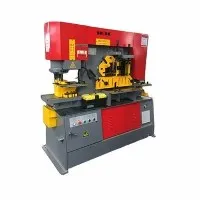
What is the difference between a single - cylinder and a dual - cylinder CNC press brake machine?
As a supplier of CNC press brake machines, I often encounter inquiries from clients curious about the disparities between single - cylinder and dual - cylinder CNC press brake machines. Both types serve the fundamental purpose of bending metal sheets, yet they possess distinct characteristics that make them suitable for different applications. In this blog post, I'll delve into the key differences to help you make an informed decision for your metal - working needs.

1. Structural Design
The most obvious difference between single - cylinder and dual - cylinder press brake machines lies in their hydraulic cylinder configuration. A single - cylinder press brake machine, as the name implies, is equipped with a single hydraulic cylinder. This cylinder is typically located at the center of the upper beam, applying force directly downwards to bend the metal sheet placed on the lower die.
On the other hand, a dual - cylinder press brake machine features two hydraulic cylinders, usually positioned at both ends of the upper beam. This dual - cylinder setup allows for a more evenly distributed force across the length of the bending area. The balanced force application is crucial for achieving consistent bending results, especially when working with longer metal sheets.
2. Bending Force and Capacity
Single - cylinder press brake machines are generally suitable for smaller - scale bending operations. The single cylinder can generate a certain amount of force, but due to its centralized position, the force distribution may be less uniform over a large bending length. As a result, they are often used for bending thinner and shorter metal sheets. For instance, in a small - scale workshop that mainly deals with custom - made small metal components like brackets or small enclosures, a single - cylinder press brake can be a cost - effective choice.
Dual - cylinder press brake machines, however, offer greater bending force and better force distribution. The two cylinders work in tandem to apply a more balanced and powerful force along the entire length of the bending area. This makes them ideal for bending thicker and longer metal sheets. Industries that require large - scale metal fabrication, such as the construction and automotive sectors, often prefer dual - cylinder press brake machines. For example, when manufacturing large steel beams for building structures or long automotive body panels, a dual - cylinder press brake can ensure accurate and consistent bends.
3. Bending Accuracy
Bending accuracy is a critical factor in metal fabrication. Single - cylinder press brake machines may have limitations in achieving high - precision bends, especially for long - length workpieces. The centralized force application can cause slight variations in the bending angle along the length of the sheet, leading to less accurate results.
Dual - cylinder press brake machines excel in this aspect. The balanced force distribution provided by the two cylinders helps to minimize angle variations and ensures more precise bending. Advanced dual - cylinder models are often equipped with sophisticated control systems that can further enhance bending accuracy. These control systems can adjust the force applied by each cylinder in real - time, compensating for any material inconsistencies or external factors that may affect the bending process.
4. Cost
Cost is another important consideration when choosing between a single - cylinder and a dual - cylinder press brake machine. Single - cylinder press brake machines are generally more affordable due to their simpler design and lower manufacturing costs. They require fewer components, such as hydraulic cylinders and associated control systems, which translates into a lower upfront investment. This makes them an attractive option for small businesses or startups with limited budgets.
Dual - cylinder press brake machines, on the other hand, are more expensive. The additional hydraulic cylinders, more complex control systems, and higher - quality structural components contribute to the increased cost. However, the higher price is often justified by their superior performance, especially in large - scale and high - precision metal fabrication projects.
5. Speed and Efficiency
In terms of bending speed, dual - cylinder press brake machines generally have an advantage. The two cylinders can work simultaneously to apply force more quickly, reducing the bending cycle time. This is particularly beneficial for mass production, where speed and efficiency are crucial for meeting production targets.
Single - cylinder press brake machines may take longer to complete a bending operation, especially for larger workpieces. The slower speed can be a limitation in high - volume production environments. However, for jobs that require more intricate bending or where there are frequent changes in the bending program, the relatively slower speed of a single - cylinder machine may not be a significant drawback.
6. Maintenance and Service
Maintenance requirements also differ between single - cylinder and dual - cylinder press brake machines. Single - cylinder machines have a simpler hydraulic system, which generally means less complex maintenance procedures. With only one cylinder to maintain, there are fewer components that can potentially fail, making troubleshooting and repairs easier.
Dual - cylinder press brake machines, with their more complex hydraulic and control systems, require more in - depth maintenance. Regular inspections of the two cylinders, as well as the associated hydraulic lines and valves, are necessary to ensure optimal performance. Additionally, the control systems need to be calibrated regularly to maintain bending accuracy. However, most modern dual - cylinder press brake machines are designed with user - friendly maintenance features, and many manufacturers offer comprehensive maintenance services to support their customers.
Applications
Single - cylinder press brake machines are widely used in small - to - medium - sized workshops for applications such as custom metal part manufacturing, HVAC duct fabrication, and small - scale furniture production. They are well - suited for jobs that involve bending thinner materials and shorter lengths.
Dual - cylinder press brake machines find extensive use in large - scale manufacturing industries. They are commonly used in construction for bending steel beams and plates, in automotive manufacturing for shaping body panels, and in the aerospace industry for fabricating metal components with high precision requirements.
If you are in the market for a CNC press brake machine, you might also be interested in our Manual Press Brake Bending Machine, Press Brake Bending Machine, and Hydraulic Sheet Bending Machine. These machines offer different features and capabilities to meet your specific metal - working needs.
In conclusion, the choice between a single - cylinder and a dual - cylinder CNC press brake machine depends on various factors, including the type and scale of your metal - working projects, your budget, and your accuracy requirements. If you're still unsure which type of press brake machine is right for you, our team of experts is here to assist. We can provide detailed product information, offer personalized advice based on your specific needs, and even arrange on - site demonstrations. Don't hesitate to reach out to us to start a discussion about your metal - bending requirements. We look forward to helping you find the perfect CNC press brake machine for your business.
References
- Metal Fabrication Handbook: A Comprehensive Guide to Metal Bending and Forming
- Hydraulic Machinery Principles and Applications in Metalworking
- CNC Machine Technology and Its Impact on Metal Fabrication