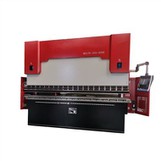
Hey there! As a supplier of hydraulic press brakes, I often get asked about the floor load requirement for these machines. It's a crucial factor that can't be overlooked when installing a hydraulic press brake in your facility. In this blog, I'll break down what floor load requirements are, why they matter, and how to determine the right one for your hydraulic press brake.
First off, let's understand what floor load requirement means. Simply put, it's the amount of weight per square foot that the floor can safely support. Hydraulic press brakes are heavy pieces of equipment, and they exert a significant amount of force during operation. If the floor can't handle the weight and pressure, it can lead to serious problems like floor damage, misalignment of the machine, and even safety hazards.
Why does the floor load requirement matter? Well, imagine installing a heavy hydraulic press brake on a floor that's not designed to support its weight. Over time, the floor may start to crack, sag, or even collapse in extreme cases. This not only damages the floor but can also cause the press brake to malfunction or become unstable, putting your operators at risk. Additionally, if you don't meet the floor load requirements, it could void the warranty of your hydraulic press brake.


Now, let's talk about how to determine the floor load requirement for your hydraulic press brake. The first step is to check the manufacturer's specifications. Every hydraulic press brake comes with a set of technical data that includes the machine's weight and the recommended floor load capacity. This information is usually provided in the user manual or on the manufacturer's website. Make sure to read these specifications carefully and follow them to the letter.
In addition to the machine's weight, you also need to consider other factors that can affect the floor load. For example, the way the press brake is installed can have an impact. If the machine is mounted on a pedestal or a baseplate, it can distribute the weight more evenly across the floor, reducing the pressure on any one point. On the other hand, if the press brake is placed directly on the floor without proper support, it can concentrate the weight in a smaller area, increasing the risk of floor damage.
Another factor to consider is the type of floor you have. Different types of floors have different load-bearing capacities. For example, a concrete floor is generally stronger and can support more weight than a wooden floor. However, even concrete floors can vary in strength depending on their thickness, reinforcement, and the quality of the concrete used. If you're not sure about the load-bearing capacity of your floor, it's a good idea to consult a structural engineer. They can perform a load test on your floor and determine if it can safely support the hydraulic press brake.
Let's take a closer look at some of our products and their floor load requirements. We offer a wide range of Hydraulic Press Brake Machine, including NC Press Brake and CNC Hydraulic Metal Sheet Bending Machine. Each of these machines has its own unique specifications and floor load requirements.
Our smaller hydraulic press brakes, which are suitable for light to medium-duty applications, typically have a lower weight and require a lower floor load capacity. These machines are often used in small workshops or manufacturing facilities where space is limited. On the other hand, our larger and more powerful hydraulic press brakes, which are designed for heavy-duty applications, have a higher weight and require a higher floor load capacity. These machines are commonly used in large-scale manufacturing plants and industrial settings.
If you're still unsure about the floor load requirement for your specific needs, don't hesitate to reach out to us. Our team of experts is always ready to help you determine the right floor load capacity for your hydraulic press brake. We can also provide you with advice on how to prepare your floor and ensure that it meets the necessary requirements.
In conclusion, the floor load requirement for a hydraulic press brake is an important consideration that shouldn't be ignored. By understanding what floor load requirements are, why they matter, and how to determine the right one for your machine, you can ensure the safe and efficient operation of your hydraulic press brake. Whether you're a small business owner looking to upgrade your manufacturing equipment or a large industrial company in need of a heavy-duty press brake, we have the right solution for you.
If you're interested in purchasing a hydraulic press brake or have any questions about our products, please feel free to contact us. We'd be more than happy to discuss your requirements and help you find the perfect hydraulic press brake for your business.
References
- Manufacturer's technical data and user manuals for hydraulic press brakes.
- Engineering guidelines for floor load calculations and structural integrity.