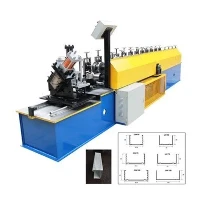
In the manufacturing industry, the hydraulic press brake stands as a cornerstone of precision metal forming. As a leading supplier of Hydraulic Press Brake Machine, I've witnessed firsthand the transformative impact of advanced technologies on the performance of these machines. Among these technologies, the pressure sensor plays a crucial yet often underappreciated role. In this blog post, I'll delve into the significance of pressure sensors in hydraulic press brakes, exploring how they enhance precision, efficiency, and safety.
Understanding the Hydraulic Press Brake
Before we dive into the role of pressure sensors, let's briefly review how a hydraulic press brake works. A hydraulic press brake is a machine tool used for bending sheet metal and plate material. It consists of a punch and a die, between which the material is placed. When the machine is activated, hydraulic cylinders apply force to the punch, causing it to descend and bend the material to the desired angle.
The accuracy of the bend is determined by several factors, including the force applied, the speed of the punch, and the position of the material. Achieving consistent and precise bends requires careful control of these variables, which is where pressure sensors come into play.
The Role of Pressure Sensors
1. Force Measurement and Control
One of the primary functions of a pressure sensor in a hydraulic press brake is to measure the force applied by the hydraulic cylinders. By accurately measuring the pressure in the hydraulic system, the sensor provides real-time data on the force being exerted on the material. This information is then used by the machine's control system to adjust the pressure as needed, ensuring that the correct amount of force is applied for each bend.
For example, if the material being bent is thicker or harder than expected, the control system can increase the pressure to ensure a proper bend. Conversely, if the material is thinner or softer, the pressure can be reduced to prevent over-bending. This level of control not only improves the quality of the finished product but also reduces the risk of damage to the machine and the material.
2. Precision Bending
In addition to force measurement, pressure sensors also play a crucial role in achieving precise bends. By providing accurate feedback on the pressure applied, the sensors allow the control system to adjust the position and speed of the punch with high precision. This ensures that each bend is made at the correct angle and depth, resulting in consistent and accurate parts.
For instance, in applications where tight tolerances are required, such as in the aerospace or automotive industries, pressure sensors enable the hydraulic press brake to achieve bends with a high degree of accuracy. This level of precision is essential for ensuring the proper fit and function of the finished parts.
3. Safety Enhancement
Safety is a top priority in any manufacturing environment, and hydraulic press brakes are no exception. Pressure sensors play a vital role in enhancing the safety of these machines by monitoring the pressure in the hydraulic system and detecting any abnormal conditions.
For example, if the pressure in the system exceeds a certain threshold, the sensor can trigger an alarm or shut down the machine to prevent damage or injury. Additionally, pressure sensors can be used to detect leaks in the hydraulic system, allowing for timely maintenance and repairs.
4. Process Optimization
Pressure sensors also contribute to the overall efficiency of the hydraulic press brake by providing valuable data for process optimization. By analyzing the pressure readings over time, manufacturers can identify trends and patterns in the bending process, allowing them to make adjustments to improve productivity and reduce waste.
For example, if the pressure sensor indicates that a particular bend requires more force than usual, the manufacturer can investigate the cause and make adjustments to the machine or the material. This can help to reduce cycle times, increase throughput, and improve the overall quality of the finished product.
Types of Pressure Sensors Used in Hydraulic Press Brakes
There are several types of pressure sensors commonly used in hydraulic press brakes, each with its own advantages and disadvantages. Some of the most common types include:
1. Strain Gauge Pressure Sensors
Strain gauge pressure sensors work by measuring the deformation of a metal diaphragm or element under pressure. As the pressure changes, the diaphragm deforms, causing a change in the electrical resistance of the strain gauge. This change in resistance is then converted into an electrical signal that can be measured and processed by the control system.
Strain gauge pressure sensors are known for their high accuracy, reliability, and wide range of measurement capabilities. They are also relatively inexpensive and easy to install, making them a popular choice for many hydraulic press brake applications.
2. Piezoelectric Pressure Sensors
Piezoelectric pressure sensors work by generating an electrical charge in response to pressure. When pressure is applied to the sensor, it causes a piezoelectric crystal to deform, generating an electrical signal that is proportional to the pressure.
Piezoelectric pressure sensors are known for their high sensitivity and fast response times. They are also capable of measuring very high pressures and are often used in applications where rapid changes in pressure need to be detected.
3. Capacitive Pressure Sensors
Capacitive pressure sensors work by measuring the change in capacitance between two electrodes as the pressure changes. As the pressure increases, the distance between the electrodes decreases, causing a change in the capacitance. This change in capacitance is then converted into an electrical signal that can be measured and processed by the control system.
Capacitive pressure sensors are known for their high accuracy, low power consumption, and long-term stability. They are also resistant to vibration and shock, making them suitable for use in harsh industrial environments.


Conclusion
In conclusion, pressure sensors are an essential component of hydraulic press brakes, playing a crucial role in enhancing precision, efficiency, and safety. By accurately measuring the force applied by the hydraulic cylinders, pressure sensors allow for precise control of the bending process, resulting in consistent and accurate parts. They also contribute to the overall safety of the machine by detecting abnormal conditions and preventing damage or injury.
As a supplier of NC Press Brake and Hydraulic Press Bending Machine, I understand the importance of using high-quality pressure sensors in our machines. That's why we only use the latest and most advanced pressure sensor technology in our hydraulic press brakes, ensuring that our customers get the best possible performance and reliability.
If you're in the market for a hydraulic press brake or are looking to upgrade your existing machine, I encourage you to contact us to learn more about our products and how they can benefit your business. Our team of experts is always available to answer your questions and provide you with the information you need to make an informed decision.
References
- Smith, J. (2019). Hydraulic Press Brake Technology: Principles and Applications. Industrial Press.
- Jones, A. (2020). Pressure Sensors in Manufacturing: A Comprehensive Guide. Elsevier.
- Brown, R. (2021). Precision Metal Forming: The Role of Hydraulic Press Brakes. Taylor & Francis.